Rethinking inclusive support for displaced and at-risk scholars: insights from an institutional study
Export to calendarAbstract
This presentation draws on key findings from a recent project on rethinking academic inclusion for displaced and at-risk scholars —to examine how universities support displaced and at-risk academics. Based on a whole-institution case study, the research combines document analysis with interviews involving academic leaders and displaced scholars. The findings reveal a tension between humanitarian commitment and structural inclusion. While the University demonstrates strong ethical engagement through fellowships, partnerships, and sanctuary initiatives, support remains fragmented, short-term, and unevenly distributed. At the same time, displaced and at-risk scholars’ lived experiences highlight both the value of academic support and the challenges of precarity, marginality, and uncertain career pathways. The study calls for a shift from humanitarian response to structural inclusion, recognising displaced scholars as academic peers rather than only beneficiaries of aid. Its insights aim to encourage critical reflection on how universities can move from symbolic sanctuary to meaningful inclusion and offer practical guidance for embedding meaningful support for displaced scholars across higher education systems.
Bio
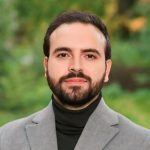
Dr Ahmad Akkad is an Honorary Research Fellow in the Department of Education at the University of Oxford and serves as a College Advisor at Blackfriars Hall, University of Oxford. He is also co-leading the Global Observatory on Academic Freedom (GOAF) at King’s College London (KCL). He is a member of the Editorial Board of Higher Education Quarterly and Co-Convenor of the Diary Method Community and the Higher Education Research Group (HERG) at KCL.
Ahmad completed his PhD at the University of Warwick. His longitudinal doctoral research examined the lived experiences of displaced Syrian academics, theorising their contributions to higher education reconstruction and the recovery–development nexus in Syria. His research interests span international higher education, particularly in conflict and recovery contexts, doctoral education, academic mobility, research cultures, and qualitative and diary-based methods.
Ahmad has taught on the MA Global Education and International Development at the University of Warwick and has lectured at several universities, notably Oxford, KCL, and in Syria. He has also collaborated with international organisations, including the Association of Commonwealth Universities and UN-supported NGOs, to promote refugee education across Europe and in conflict-affected contexts.
Event Details
Event Speakers