


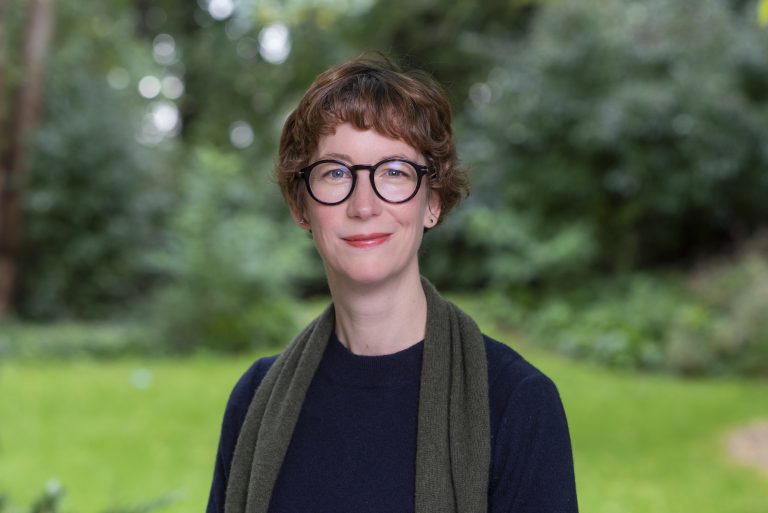

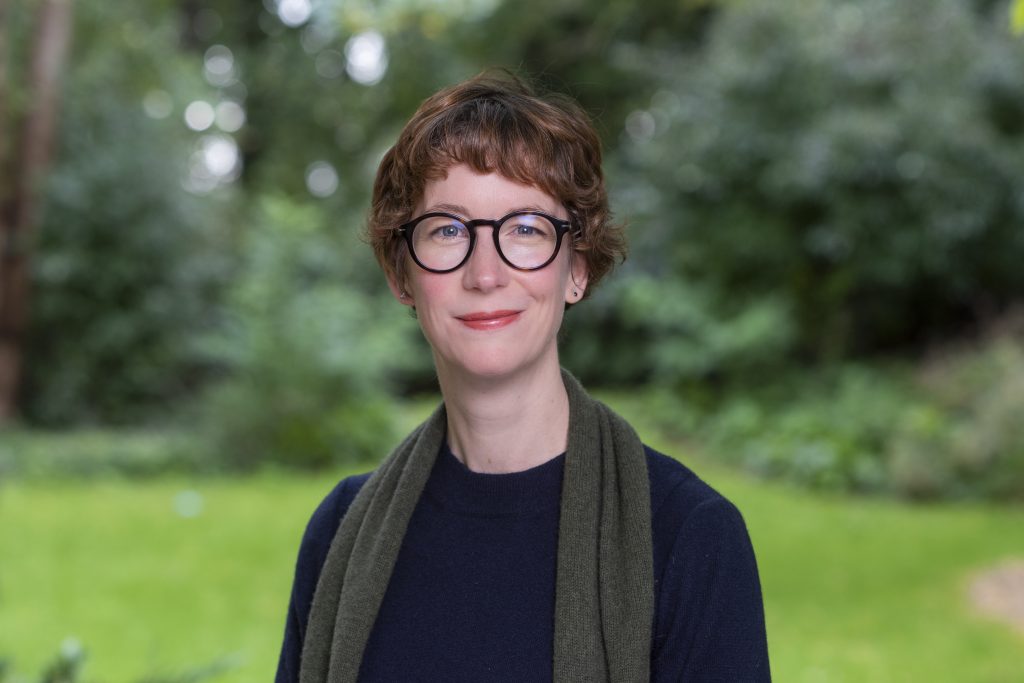
Dr Cate Hamilton has been awarded the 2026 British Educational Research Association (BERA) Doctoral Thesis Award for her DPhil thesis, “Investigating the effects of whole-class singing activities on linguistic outcomes of young foreign language learners in English primary schools.”
Cate joined the Department of Education in 2020 as an MSc in Applied Linguistics and Second Language Acquisition student and went on to complete her DPhil in 2025. She is now working as a Departmental Lecturer in Quantitative Research Methods and EAL.
Reflecting on the award, Cate said: “I will always have a special memory of BERA 2022 in Liverpool: it was my first research conference, and I won a SIG presentation award that gave me a huge confidence boost as a new DPhil.
“Winning the BERA thesis award at the end of my DPhil journey is an incredible honour. I’m proud to receive recognition for research that I hope supports teachers to make evidence-informed pedagogical choices in their classroom.”
Cate’s DPhil research investigated the widespread assumption that singing songs in primary school foreign language lessons directly supports young children’s linguistic development. Adopting a cumulative, two-phase research design, she first conducted a systematic review of classroom intervention literature, identifying a scarcity of well-controlled studies capable of supporting causal conclusions about songs’ impact on children’s linguistic outcomes.
In the second phase, she carried out a randomised controlled trial in two UK primary schools, comparing how singing, chanting and reciting stories contribute to the oral language development of 7–8-year-old beginner learners of French.
The BERA judging panel praised her work for its originality, methodological rigour and practical relevance. As the recipient of the award, Cate receives a £250 prize and complimentary registration to the BERA Conference 2026.
Listen to Dr Cate Hamilton discussing her research on the Deanery Digests Podcast.
Further insights into Dr Hamilton’s research can be found in the following Deanery Digests (plain-language summaries):
- How and why do primary and early years teachers use songs with young learners?
- Can children in classrooms learn new languages through songs? A look at what research on this topic can tell us
- Comparing how songs, chants and stories contribute to Year 3 beginner French learners’ oral language development in UK primary school lessons
Latest
-
 NewsThere is still time to apply for a part-time education programmeMarch 23, 2026
 -
 NewsDepartment researchers receive Best Paper Awards from Comparative and International Education Society 2026March 17, 2026
 -
 NewsDPhil student celebrates viva successMarch 17, 2026