





The Project
As childhood literacy undergoes a major transformation, with reading increasingly moving from paper to screens, a significant gap persists between scientific research and the design of educational apps. The InTRACt Project seeks to bridge this gap by synthesising psycholinguistic and sociocultural models to explore how different children experience digital reading.
The project’s primary objective is to investigate how specific computationally-derived text features—such as word frequency, concreteness, semantic coherence and syntactic complexity—interact with a child’s individual skills and family context. The study plans to examine factors including age, vocabulary, language locality and parental co-engagement. Exploring these complex interactions may enable us to better predict which digital stories can support different learners, accounting for their developing strategic, linguistic and conceptual knowledge.
To achieve this, the study will utilise a large, naturalistic dataset from the globally-successful ‘Applaydu’ application. This includes anonymised data from a diverse global user base across 40 countries reading in 15 different languages, providing a level of diversity and statistical power often absent in traditional lab studies. Comprehension will be measured through three lenses: processing efficiency (reading times), subjective understanding (difficulty ratings) and the construction of mental situation models (a non-verbal sequencing task).
The potential impact includes contributing to a new generation of evidence-based educational technology. By treating reading as a dynamic process shaped by a child’s environment and skills, the project will help designers create digital tools that are more effectively tailored to a child’s unique linguistic and cultural background. Finally, the project intends to promote ‘open science’ by sharing data and analysis scripts publicly, which may help these vital insights support global literacy efforts and pedagogy.
Research Team


More News
-
 NewsNew report on educational attainment in school pupils with English as an Additional LanguageFebruary 5, 2025
 -
 NewsReport published today provides evidence on what influences EAL learners to mitigate language learning lossMarch 17, 2021
 -
 NewsElizabeth Wonnacott to join as Associate Professor of Applied LinguisticsApril 14, 2020
 -
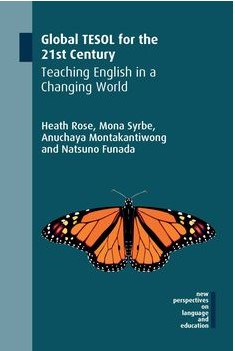 NewsDepartment Academics And Doctoral Students Author New Book On Language Teaching In Global ContextsFebruary 20, 2020
 -
MediaDon’t leave the L1 out of English-taught programs, OUP experts warnFebruary 15, 2019
-
MediaTo learn another language, first nurture your ownJanuary 22, 2019