
The Project
Listening and reading are two core language skills in children’s learning.
Understanding language — in spoken or written form — makes it possible for children to learn new topics at school in all of their subjects, from science to English, to history.
In this project, we are studying how Year 3 children (ages 7–8) understand different kinds of texts. We look at:
How children make sense of language when they listen or when they read.
How they understand stories and information texts that explain real-world topics.
Many children in England grow up using more than one language, and this is a great strength. We want to understand how children’s language experiences — for example, using another language at home or learning English at school — affect how they understand what they hear and read.
To do this, we are working with schools in the Tapscott Learning Trust in Newham – East London. Each child takes part in four friendly sessions at school where they listen to or read short texts and answer a few questions about what they have heard or read. Children also complete tasks that tap into knowledge of vocabulary and grammar and probe their working memory and attention skills. Parents complete a short online questionnaire (called Q-BEx – https://www.q-bex.org) about the languages their family uses.
By bringing this information together, we aim to:
Learn how listening and reading skills develop in childhood.
Discover which language experiences best support learning.
Give teachers and families clear guidance on how to help children grow confident in both language and reading.
Our goal is to share what we learn in accessible and practical ways — helping all children, whatever their language backgrounds, to build strong comprehension skills and enjoy learning.
Research Team

External Team
More News
-
 NewsNew report on educational attainment in school pupils with English as an Additional LanguageFebruary 5, 2025
 -
 NewsReport published today provides evidence on what influences EAL learners to mitigate language learning lossMarch 17, 2021
 -
 NewsElizabeth Wonnacott to join as Associate Professor of Applied LinguisticsApril 14, 2020
 -
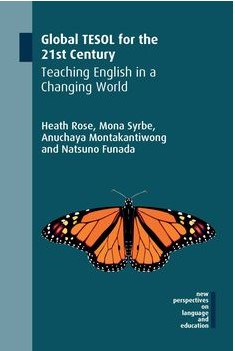 NewsDepartment Academics And Doctoral Students Author New Book On Language Teaching In Global ContextsFebruary 20, 2020
 -
MediaDon’t leave the L1 out of English-taught programs, OUP experts warnFebruary 15, 2019
-
MediaTo learn another language, first nurture your ownJanuary 22, 2019