




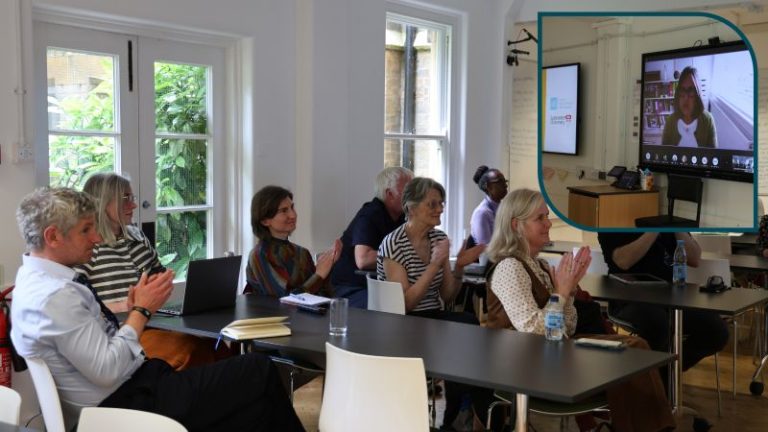
Seeing the whole system: Data, evidence and trust in family justice by Professor Karen Broadhurst

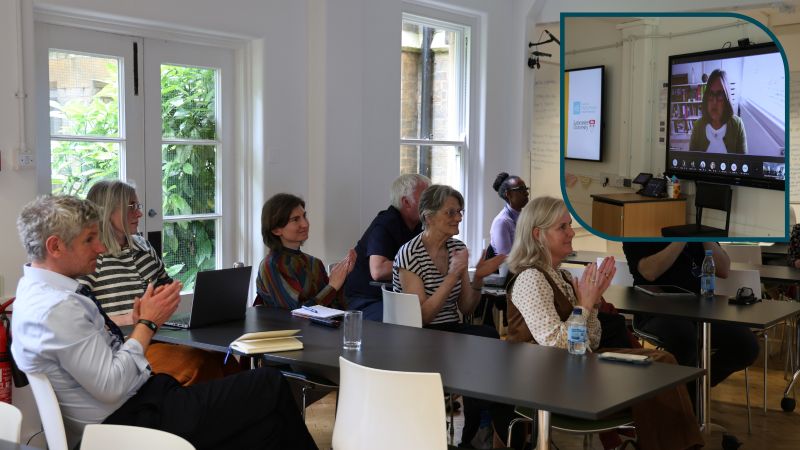
Family justice decisions can have life-changing consequences for children and families, yet research evidence in this area has historically lagged behind fields such as health and education. This has left important questions about fairness, effectiveness and accountability only partly understood.
In this lunchtime seminar for the Rees Centre, Professor Karen Broadhurst explored how access to and linking of large administrative datasets across justice, health, education and welfare are helping researchers “see the whole system” and strengthen public trust in family justice.
The speaker
Professor Karen Broadhurst OBE FAcSS is at the School of Social Sciences, Lancaster University and is an internationally recognised expert in child and family justice research. Awarded an OBE in 2026 for services to child and family justice research, her work has influenced national policy and practice relating to women and children involved with children’s social care and the family courts.
The webinar
In her talk, Seeing the Whole System: Data, Evidence and Trust in Family Justice, Professor Broadhurst argued that stronger evidence is essential for improving both policy and public confidence in the family justice system.
She highlighted criticism of the “closed” nature of family courts, where restrictions on reporting and public access can create perceptions of secrecy. While courts must protect children’s privacy and welfare, she argued that better evidence is needed to address concerns about legitimacy, fairness and accountability. Researchers should also be aware that research will be heard, understood and responded to in the context of these broader legitimacy concerns.
The webinar explored how administrative data and linked datasets across justice, health, education and welfare are transforming family justice research. These approaches allow researchers to identify regional variation, assess outcomes over time and examine whether similar cases are treated consistently across the system.
However, Professor Broadhurst also stressed that qualitative research remains essential for understanding lived experience but argued that it should be complemented by population-scale evidence capable of identifying broader patterns and demonstrating how generalisable these lived experiences are.
A key example was the Born into Care research series (funded by the Nuffield Foundation and Australian Research Council), which combined large-scale linked data analysis with collaborative frontline research. One major finding revealed significant regional variation in the use of same-day hearings for newborn babies entering urgent care proceedings. The research contributed to the introduction by the Judiciary of a New-born Baby Protocol aimed at reducing same-day hearings across the family courts.
Areas of debate
The seminar raised important questions about how family courts can balance children’s privacy with principles of open justice and public accountability.
Discussion also focused on the opportunities and challenges of large-scale administrative data research. While linked datasets can reveal inequalities and inconsistencies that would otherwise remain hidden, they also require researchers to consider a range of ethical and methodological issues about their use and interpretation.
What is the Rees Centre doing?
The Rees Centre recognises the importance of generating evidence by bringing together the analysis of large-scale quantitative datasets and qualitative research methods. At the Rees centre, this combined approach has enabled researchers to identify broader trends and patterns while also capturing the diversity and complexity of individual lived experiences. Examples of our work include:
- Emeritus Professor Harriet Ward was involved in developing the Born into care: best practice guidelines and is co-lead in establishing the i-Trauma interdisciplinary hub to promote developmental recovery for infants.
- Dr Bachar Alrouh is co-lead (with Professor Broadhurst) on the Children’s Outcomes for Mothers Facing Trial (COMFT)
- Dr Ludivine Garside is lead co-chair (with a public contributor and partners from UCL, the University of Sheffield, NHS England, and Swansea University) of the DARE UK-funded Improving Transparency Around Linkage Outputs (ITALO) community group, interested in developing linkage quality reporting standards able to maintain the trust of data subjects while meeting the needs of research users.
- Dr Georgia Hyde-Dryden led the Rees Centre’s involvement in the Evaluation of Pupil Premium Plus Post 16 for the Department for Education (DfE).
- Dr Alice Tawell led the final report of the Evaluation of the extension of virtual school head duties to children with a social worker for the DfE.
- Professor Leon Feinstein led the Pathways into and through higher education for young people with experience of children’s social care project funded by TASO (Transforming Access and Student Outcomes in Higher Education).
Find out more:
Other resources
- Centre for Child and Family Justice Research, Lancaster University: https://www.lancaster.ac.uk/centre-for-child-and-family-justice-research/
- Nuffield Family Justice Observatory: https://www.nuffieldfjo.org.uk/
- Born into Care research series: https://www.nuffieldfjo.org.uk/resource/newborn-babies-urgent-care-proceedings
Written by Dr Georgia Hyde-Dryden
Latest
-
 BlogWhat does stability really mean for children in care?October 1, 2026
 -
 BlogAchieving and thriving through belongingSeptember 24, 2026
 -
 BlogUnderstanding children and families through linked data: Opportunities and evidenceJune 19, 2026