




Understanding children and families through linked data: Opportunities and evidence

Understanding lives across systems
Children and families do not experience public services in neat organisational silos. Their lives may intersect with health services, schools, social care, welfare systems and, for some families, the justice system. Yet research evidence has often been generated within these separate domains, limiting our understanding of how experiences in one part of the system influence outcomes in another.
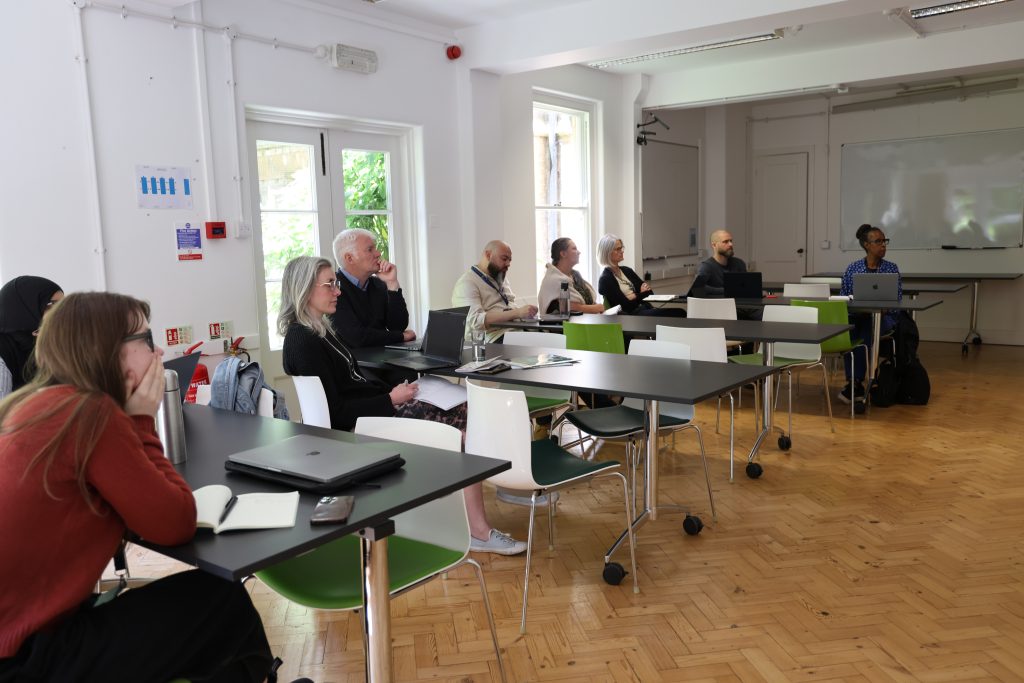
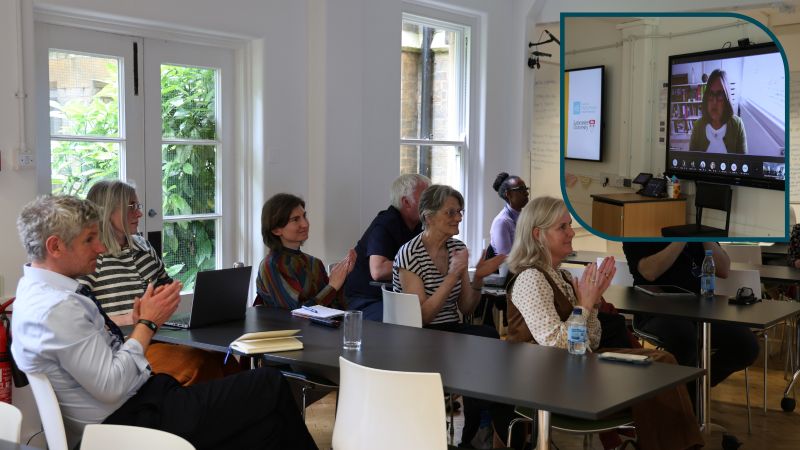
In the second webinar of the Rees Centre’s Linked Administrative Data Seminar Series, Professor Lucy Griffiths from Swansea University explored how linked administrative data can help overcome these limitations. Drawing on examples from Administrative Data Research (ADR) Wales, and use of the Secure Anonymised Information Linkage (SAIL) Databank, she demonstrated how connecting data across sectors can generate new insights into the lives of children, young people and families.
The presentation provided a compelling illustration of how linked data are changing not only the scale of research that is possible, but also the kinds of questions researchers can ask about children’s lives, family experiences and public services.
About the speaker
Lucy Griffiths is Professor of Epidemiology at Swansea University and Director of Research for ADR Wales. Her work focuses on the use of linked administrative data to improve understanding of population health and wellbeing and to generate evidence that informs policy and practice.
Much of her work has drawn on the SAIL Databank, which provides researchers with secure access to linked, anonymised administrative data from across health, education, social care and other public services in Wales.
From data linkage to life-course understanding
A central message from Lucy’s presentation was that data linkage enables researchers to move beyond snapshots of service use and towards a more rounded understanding of people’s lives.
By securely connecting information held across different public services, researchers can examine how experiences accumulate over time and how different systems interact. Rather than viewing health, education, social care or justice separately, linked data make it possible to understand the pathways through which children and families experience these systems.
Lucy illustrated this through a range of studies conducted using Welsh administrative data. These included research examining sibling placements in care, disabilities among children receiving care and support, neurodevelopmental disorders among children with care experience, and educational outcomes for looked after children. Together, these examples demonstrated how linked administrative data can reveal patterns that would be difficult to identify using any single dataset.
Particularly striking was the ability to follow experiences across the life course. By linking information from multiple sectors, researchers can begin to understand not only outcomes, but also the pathways and circumstances that shape them. This opens up opportunities to ask more meaningful questions about vulnerability, resilience and the effectiveness of services and interventions.
Trust as the foundation for innovation
While linked data offer significant research opportunities, Lucy emphasised that their value depends on maintaining public trust.
A particularly important aspect of the presentation was the focus on governance, transparency and public involvement. The SAIL Databank’s approach combines secure technical infrastructure with robust governance arrangements, including independent review processes and ongoing engagement with members of the public.
These safeguards are increasingly important as researchers explore new opportunities involving data federation, synthetic data and artificial intelligence. As analytical capabilities continue to evolve, maintaining public confidence in how data are accessed, linked and used remains essential.
The presentation served as a reminder that successful administrative data research depends not only on technological innovation but also on ensuring that data are used responsibly, ethically and in ways that deliver public benefit.
What is the Rees Centre doing?
Lucy’s presentation highlighted the value of looking beyond individual services to understand how children’s experiences unfold across health, education, social care and justice systems. This perspective is central to much of the Rees Centre’s work.
Across our research, we seek to improve understanding of the experiences and outcomes of children and families in contact with children’s services by bringing together different forms of evidence and working closely with policymakers, practitioners and people with lived experience. Many of the questions explored at the Rees Centre focus on how systems interact, how children’s pathways develop over time, and how evidence can be used to improve policy and practice.
The opportunities presented by linked administrative data are increasingly important for addressing these questions. As Lucy’s presentation demonstrated, linking information across sectors can help researchers move beyond individual services and develop a richer understanding of children’s lives, family experiences and long-term outcomes.
At the same time, linked administrative data provide only one perspective on children’s and families’ experiences. At the Rees Centre, quantitative evidence is complemented by qualitative research and lived-experience perspectives, with the voices of children, families and practitioners playing a central role in shaping our research design and interpretation of findings. This commitment is reflected in work such as the Children’s Information Project, which explores how information about and from children and families can be used ethically and effectively to improve lives..
Readers interested in learning more about the Rees Centre’s current research can explore the Rees Centre projects page, which showcases work spanning children’s social care, family justice, education, kinship care, adoption, fostering and the use of data and evidence to improve outcomes for children and families.
Looking across the series
Lucy’s presentation builds naturally on the themes explored in the first webinar by Professor Karen Broadhurst, who highlighted the importance of linked administrative data for understanding family justice as part of a wider system of services and experiences.
Karen’s presentation focused on why linked data matter. Readers can find a summary of those themes in the blog, Seeing the Whole System: Data, Evidence and Trust in Family Justice. Lucy’s presentation showed how secure data infrastructures such as the SAIL Databank make this research possible, demonstrating the breadth of questions that can be addressed when different sources of data are brought together.
The final webinar in the series, Children and Family Outcomes in the Family and Criminal Justice Systems: Insights from Linked Administrative Data, will build on these themes by reflecting on both the opportunities and challenges of using linked administrative data to understand outcomes for children and families. Drawing on examples from family justice, criminal justice and children’s social care research, the session will consider the potential of cross-sector data linkage to generate policy-relevant evidence, while also exploring the methodological, ethical and practical challenges that accompany this work.
Taken together, the three webinars offer a broader conversation about linked administrative data: why they matter, how they can be used, and what is needed to realise their full potential for research, policy and practice.
Written by Dr Bachar Alrouh.
Latest
-
 BlogWhat does stability really mean for children in care?October 1, 2026
 -
 BlogAchieving and thriving through belongingSeptember 24, 2026
 -
 BlogSeeing the whole system: Data, evidence and trust in family justice by Professor Karen BroadhurstMay 28, 2026