




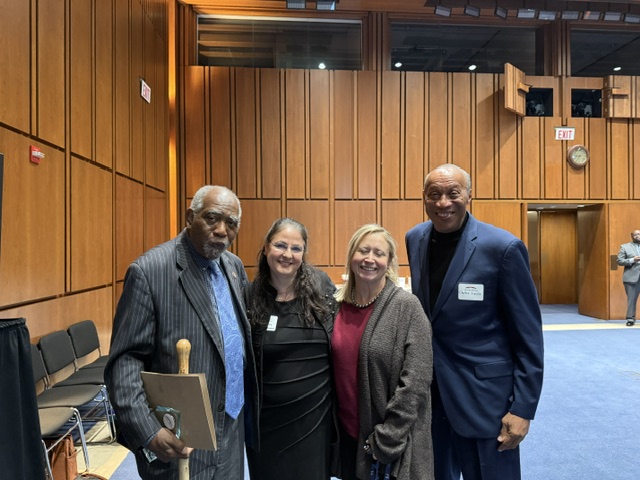
Rees Centre’s Angelique Day receives Breaking Barriers Award

Angelique said: “I am deeply honored to receive Voice for Adoption’s Breaking Barriers Award.
“I accept this recognition with gratitude—and with humility—because this work has never belonged to one person. It belongs to young people who have insisted on being heard, families who have opened their homes and their lives, relatives who have stepped forward, tribal and community leaders, practitioners, advocates, researchers, and public servants who continue to believe that every child deserves connection, stability, and belonging.
“This award is especially meaningful because it reflects a vision that I share so deeply: permanency.
“For me, that vision means more than a placement. It means a safe and lasting relationship. It means a child’s identity, culture, community, and voice are respected. It means permanency is not delayed because a system is unable—or unwilling—to adapt to a child’s age, needs, race, disability, geography, or family circumstances.”
The award celebrates transformative leadership that has challenged the status quo and expanded opportunities for children in foster care to achieve permanency. Recognising innovation across state, county, tribal, or community systems, this award honours efforts that remove barriers, address inequities, and create brighter futures for children and youth.
Throughout Angelique’s career, she has worked to connect research, policy, and practice in service of that vision. Her earliest research examined postsecondary access, retention, and success for young people with foster care experience.
She founded two college access and retention programs in the State of Michigan: the Transition to Independence Program at Wayne State University and FAME—the Fostering Academics Mentoring Excellence program at Michigan State University.
These efforts expanded educational opportunities for students with foster care experience and challenged assumptions about what young people from foster care can achieve.
Her work demonstrates that supporting education is an essential part of permanency, because a stable future requires more than a bed for tonight. It requires trusted adults, opportunity, and the confidence that one’s life can be larger than one’s case file.
Her work has also focused on kinship care, recognising that children are often best served when they can remain connected to relatives, culture, and community.
Through kinship navigator research and evaluation, including work with Washington State, tribal communities, and grandfamilies, she has witnessed how relatives step forward with love—and how systems must step forward with practical support.
This year, she is taking that work global by expanding kinship navigation in the UK.
Angelique received the award at a ceremony hosted by the U.S. Senate in Washington, DC, on Tuesday 17 November.
This recognition highlights the importance of removing barriers and improving outcomes for children and young people in care, a central focus of the Rees Centre’s research.
Latest
-
 NewsRees colleagues conferred title of ProfessorNovember 2, 2026
-
 NewsResearch highlights the challenges facing children and young people who go missingOctober 30, 2026
-
 BlogSupporting foster families: lessons from a Norwegian visit to Oxford and the Rees CentreOctober 26, 2026