




Supporting foster families: lessons from a Norwegian visit to Oxford and the Rees Centre

In my work with Norway’s child welfare services (BUFETAT), together with two colleagues, I develop training and supervision for professionals supporting specialist foster homes and emergency foster care. My interest is practical: how can research help us improve the everyday experiences of children and their caregivers?
Hosted by Teresa Williams, my visit let me explore this question with researchers across foster care, family relationships, education, and children’s participation. Three connected messages stood out: support the people who support carers, protect meaningful relationships, and listen carefully to children.
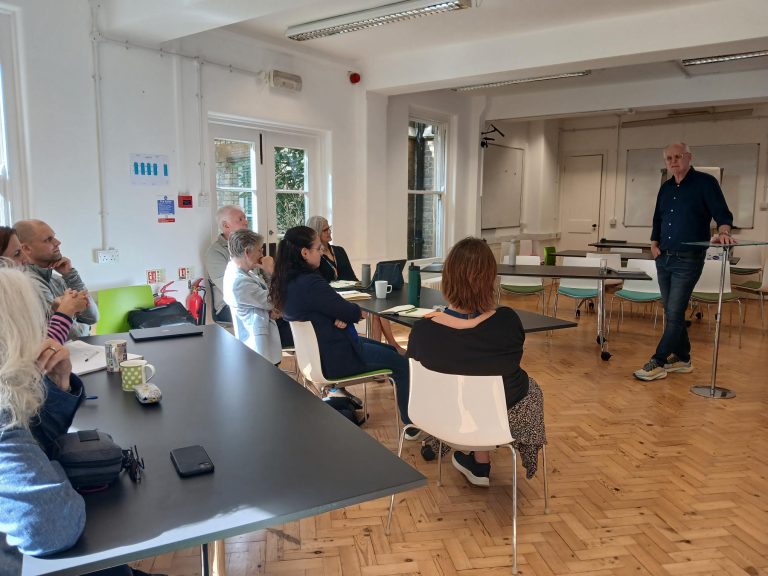
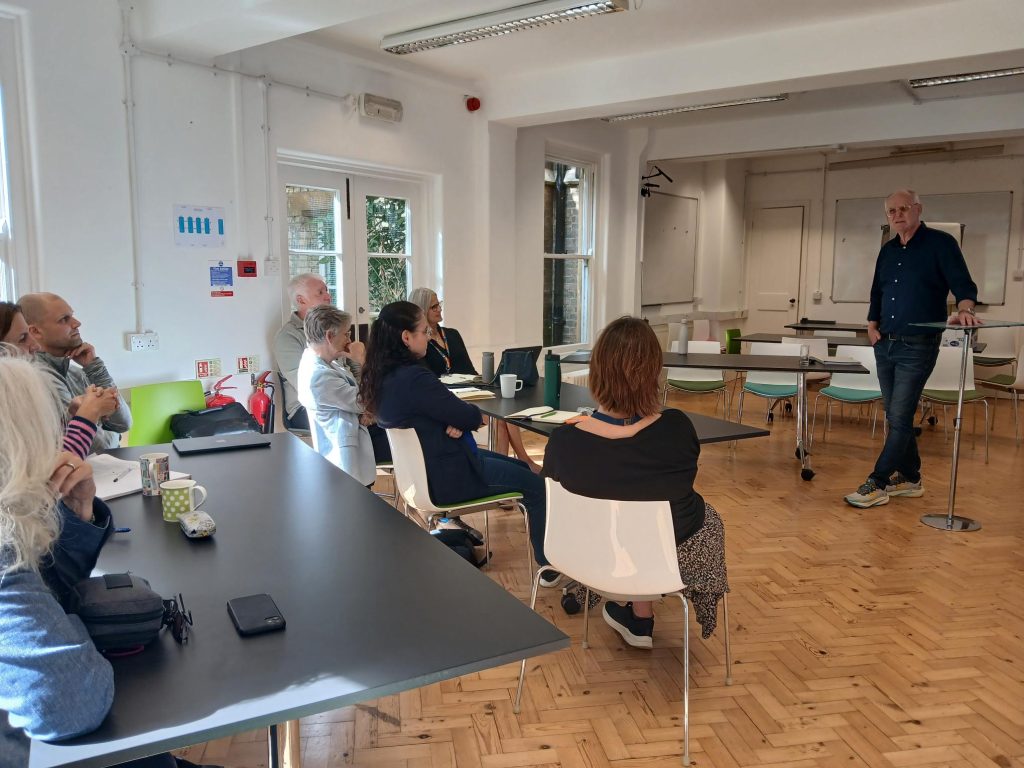
Presentation at an internal seminar at University of Oxford’s Department of Education and the Rees Centre October 12.30pm – 2pm
Bridging Research, Practice and Policy: Lessons from Norwegian Child Welfare Services
Summary
How can professional expertise and public policy work together to improve outcomes for vulnerable children? This presentation draws on Norway’s child welfare services, focusing on specialized foster care, training, supervision models, strategies, and current reform initiatives. The aim is to demonstrate how closer integration of practice and policy can strengthen services for children and families with complex needs.
Children facing adversity need more than protection. They need systems that provide high-quality care, stable relationships, and effective support over time. This presentation shows how Norway’s child welfare services are addressing these challenges through specialized foster care, professional development, reflective supervision, and organizational reform. The session will share practical experiences and lessons learned that may be relevant across national contexts.
In my presentation, I also focused on the strong ties between Great Britain and Norway over hundreds of years, particularly during the Viking period. Sigrid at Egge fostered King Magnus the Good, the son of Saint Olav (Olav den Hellige or Olav Haraldson), who killed Sigrid’s two sons (Grotgard and Tore) and her husband, Ølve at Egge, at a “blot” (Pagan sacrifice) on Mære in 1021. Both Egge and Mære are historical sites in my own Municipality, Steinkjer, the same municipality that sponsored this visit to England and Oxford.
Supporting those who support foster carers
Training foster carers is only one part of the picture. The professionals who guide them also need opportunities to reflect, develop their skills, and receive support. For me, this means paying attention to supervision at every level: not only what professionals offer foster families, but also what helps those professionals work effectively.
In Central Norway, my colleague and I have developed a program for professionals who supervise specialist and emergency foster carers. My visit prompted me to reflect on how we can strengthen its research foundations and assess its contribution. A useful distinction is between delivering training and determining whether it changes practice. Attendance and satisfaction matter, but they do not tell us whether children receive better care. Evaluation needs to link professional learning to what happens in families. It would be progressive to collaborate with new colleagues at the Rees Center on research on this topic in the future.
Relationships are more than a background condition
A strong theme in my conversations at the Rees Centre was the importance of relationships, stability, and belonging. For children who cannot live with their parents, safety is essential, but so are the people, places, and connections that help them feel known. Specifically, I was introduced to a new concept: “healthy stability.” Which relationships in a foster child’s life should carry over to a new foster home when the current one breaks down?
This perspective also prompted me to reflect on approaches explored during the broader study visit to England. Kinship care seeks to preserve familiar relationships by enabling children to live with relatives or others they know. Mockingbird brings foster families together around an experienced hub family, creating opportunities for practical help, shared activities, and support. These approaches raise a question relevant to Norway: how can services strengthen the networks around children and caregivers rather than support each household in isolation? The “hub perspective” in the Norwegian government parliamentarian report “With the child all the way”.
Children must help define what good support means
A further takeaway was the importance of children’s perspectives. Professionals may prioritize placement stability or educational progress, while a child may first want to talk about seeing a sibling, trusting an adult, or feeling included at school.
These perspectives should complement, not compete with, professional assessments. They also challenge researchers to ask whose definition of success guides an evaluation. Fewer placement moves matter; understanding whether children feel secure and connected adds what administrative measures alone cannot capture. My talk with Professor Clive Diaz at the Centre, and our conversation afterward, has already led to future cooperation.
Turning shared questions into better practice
For our work in Norway, these reflections suggest three priorities. First, we should evaluate training and supervision beyond the classroom. This means examining changes in professional practice alongside carers’ experiences and children’s well-being, relationships, and everyday lives.
Second, international learning should involve careful adaptation, not simply importing a program. Norway and England have different service structures and legal frameworks. We need to understand how an approach works, what resources it requires, and whether it meets local needs, including those of families from diverse cultural backgrounds.
Third, research should bring together children, foster carers, supervisors, schools and child welfare services. My planned research on specialist foster care offers an opportunity to develop this approach, with children’s participation and appropriate ethical safeguards built into the design.
The visit provided a starting point for exploring future collaboration, rather than a definitive set of answers. Shared research questions and carefully chosen measures could help us learn from each other while remaining attentive to the differences between our systems.
Keeping children’s lives at the Centre
I left Oxford with a clearer sense that better foster care depends on more than choosing the right training model. It requires supported professionals, connected foster families, and sustained attention to what matters to children. I am grateful to Teresa Williams and colleagues at the Rees Centre for their warm and thoughtful conversations. The challenge now is to translate that exchange into questions we can investigate and into improvements children can experience.
Take-home messages from Oxford
- Healthy stability in relationships is the positive ingredient; it trumps being in a foster home that does not nurture the child.
- Trust and safety should always be assessed both among foster parents and the children who live in a foster home when evaluating progress.
- How children thrive in school is also a strong predictor of success.
- Kinship care seems to be something we in Norway ought to look more closely into.
- How to talk to children in court settings must be explored more.
- Relationships are the “holy grail”.
This study visit was supported by Ragnhild Margrethe Øverland Skjemstad’s legat.
Written by Tore Aune, PhD
Professor, Clinical Psychologist Specialist, Bufetat, Norway
Latest
-
 BlogWhat does stability really mean for children in care?October 1, 2026
-
 BlogAchieving and thriving through belongingSeptember 24, 2026
-
 BlogUnderstanding children and families through linked data: Opportunities and evidenceJune 19, 2026