




Achieving and thriving through belonging

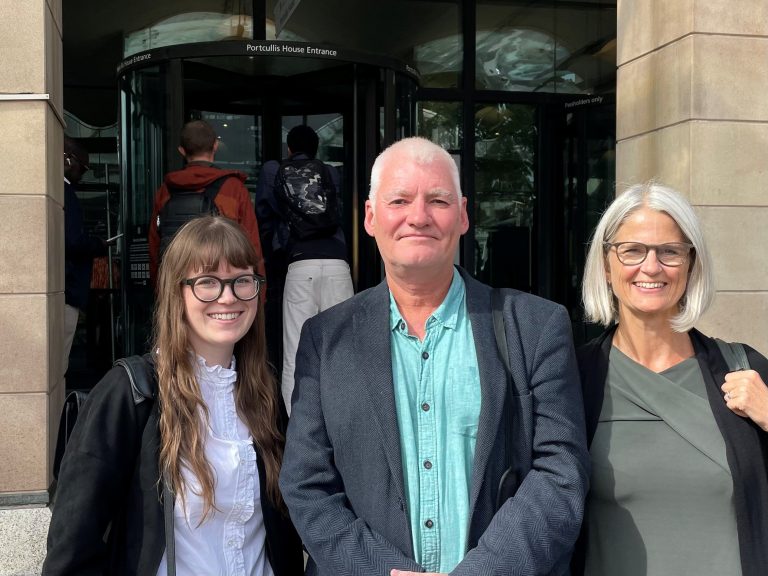
This was the second of two evidence sessions, and this blog – co-authored by Teresa Williams (Principal Investigator for the Belonging in Education Research Network), Alice Tawell (Adviser to the Research Network) and me – summarises the main arguments made by in our written and oral evidence together with some reflections from me and my co-investigators on key areas for further thinking and work in light of the Committee’s questions and the responses across the two panels.
About the Network: Why we were asked to give evidence
The Belonging in Education Research Network brings together research evidence, practice expertise and lived experience to build more equitable education systems, where belonging is the guiding principle. The Research Network brings together practitioners, system leaders, and academics working in education, children’s social care, special educational needs and disabilities, and youth justice to collate, improve, and act on evidence to enhance school practice in promoting belonging. The Network is convened by the Rees Centre (Research and Evidence for Children’s Social Care) and funded by a grant from the University of Oxford’s Economic and Social Research Council Impact Accelerator Account. At the end of its first year, the Research Network published a Statement on the Importance of Belonging in Education. As a central argument in the White Paper is that belonging is a central condition for achievement, attendance, inclusion and long-term wellbeing, the Committee was interested in what we had to say about what belonging is, whether we agree that it matters and what is needed to deliver it (including any recommendations for change to the government’s proposals).
Our key messages
What we mean by belonging
The White Paper itself does not offer a formal explicit definition of belonging. The Network has offered the following preliminary definition based on research and practice evidence:
Belonging in education refers to the dynamic processes by which schools and other learning settings create the conditions to ensure everyone in their communities experiences:
- Safety and stability – feels physically and psychologically safe, supported and included, and protected from discrimination;
- Identity and authenticity – feels known, valued, and that they matter and can develop and express their authentic selves in a way that celebrates difference;
- Relationships and connection – can make, maintain, and mend positive relationships and navigate rupture and repair;
- Purpose and achievement – can develop their learning aspirations and be enabled to achieve them; and
- Agency (voice and participation) – is empowered with meaningful opportunities to actively participate, shape, and contribute to an increasingly inclusive, equitable, and anti-discriminatory environment that values difference.
The Research Network will update this annually as new evidence and experience emerges. Given the importance of agency, voice and participation to our definition, we are especially keen to work with children and young people, and their parents and carers in refining this definition over time.
Why it is important
We welcome the White Paper’s recognition of the importance of belonging as a core condition for improving attendance, engagement, achievement and wellbeing, rather than a secondary pastoral condition. This is important as belonging (and the relational practice that underpins it) has sometimes been characterised as a threat high expectations. This is absolutely not the case as we argue – on the basis of research evidence, which children and families tell us and practice experience – that strong relationships are critical to ensuring pupils are effectively supported and challenged to meet high expectations for achievement, attendance and behaviour. We would add that the benefits of belonging are as relevant to the adults (including teachers, parents and carers) in education settings as it is to the pupils; and that all pupils benefit, not just those facing the greatest adversity. Across its two evidence sessions, the Committee heard many times that complaints from parents and carers are increasing, and the challenges relating to staff turnover and wellbeing when high expectations are not met. School staff are the primary creators of belonging and mattering. Developing environments where pupils and their parents/carers feel known, valued, and listened to requires specific skills and professional development. Staff who themselves feel valued and supported are better able to create those conditions for the children they serve.
What is needed to deliver belonging
- Relationships are the key mechanism. Teachers and schools who know children well and model how to build, maintain and repair positive relationships can help children to improve engagement, reduce behaviour difficulties, strengthen resilience and support educational recovery after adversity.
- Attendance and behaviour need to be understood relationally. Behaviour often communicates unmet need – e.g., relational trauma and adversity. Belonging should be recognised as a foundational protective factor. Young people who feel known, valued and respected are more likely to engage positively, participate in enrichment opportunities, and demonstrate positive behaviour. Behaviour should be understood through a relational and developmental lens rather than solely a disciplinary one. School exclusion should be viewed as an outcome that indicates earlier support opportunities may have been missed.
- The right for all to be safe in school. Both students and staff need to feel safe and this needs to be reflected in school policies and practice. This position will enable the needs of the other students and teachers, as well as the individual child, to be acknowledged and met, thereby ensuring the safety of all parties and supporting their sense of belonging.
- Effective staff development: Make relational practice, inclusion, trauma-informed approaches, and belonging central elements of initial teacher education, Continuing Professional Development (CPD), and leadership development programmes.
- Culture change needs time and resources: It is essential for the Government to recognise that the shift to belonging as a central rather than secondary condition requires is a culture change programme. This in turn needs engagement and buy-in of pupils, families/carers and professionals; investment in staff development and leadership; and time/space to deliver.
Issues for further thinking and collaboration
This was the second of two evidence sessions and the key lines of enquiry from the Committee and the responses across all the panels raised a number of issues for further thinking and research.
- There were lots of questions about the complex delivery landscape in which MATs, Local Authorities, and maintained schools and FECs co-exist with overlapping geographies and sometimes differing underlying objectives. This is a huge challenge to the Committee’s (and the Research Network’s) central question which is – how can we deliver this at scale?
- The role of partnership is therefore key but, as the Committee pointed out, partnership is most effective where there are very clear shared goals. We would add (based on a recent forthcoming review) that these goals also need to be underpinned by clear underpinning philosophies, supported by evidence – such as social justice, ethics of care, and the centrality of relationships.
- All agreed that data has a central role to play, but there are dangers in over-reliance on performance management. Alongside data we need to understand lived experience and the proposals for a Pupil Engagement Framework need to do more to implement learning from social care and beyond on how to engage children (especially those who are currently least engaged) more effectively. The innovative work of Coram Voice on BrightSpots and ‘Ask me What Matters’ could be adapted to education settings. Government should incorporate children’s experiences as part of the evaluation criteria for these reforms.
Final reflections
Reflecting with colleagues after the event, there were three areas which need further thinking.
First, we think there is room for further join-up across the different areas of education and social care reform. In particular, we note that ‘belonging’ is barely mentioned in the SEND reforms, despite it playing a critical role in inclusions. We appreciate the Committee are not looking at SEND reforms, but feel there is space to comment on the scope for greater alignment.
Second, we were surprised not to hear more about the role of sector-led improvement in children’s social care could play to complement the role of inspection and other accountability mechanisms. Through the Research Network and our wider work with Yorkshire and Humber Improvement and Innovation Alliance, we are learning about the scope for regional sector-led improvement to be a catalyst for regional level embedding of belonging and inclusion approaches, involving social care and education.
And finally, I want to end by emphasising our strongly held view that if belonging is to be embedded effectively, it can’t be seen as ‘another thing to do’ for an already over-stretched education system. Our Research Network is exploring ‘Belonging’ as a way of prioritising, integrating and making sense of other change programmes rather than additional ask. We haven’t got all the answers yet, but will share them as we continue our journey.
Written by Professor Ian Thompson (Professor of Inclusive Education), Teresa Williams (Senior research Fellow) and Alice Tawell (Postdoctoral Researcher)
Latest
-
 BlogWhat does stability really mean for children in care?October 1, 2026
 -
 BlogUnderstanding children and families through linked data: Opportunities and evidenceJune 19, 2026
 -
 BlogSeeing the whole system: Data, evidence and trust in family justice by Professor Karen BroadhurstMay 28, 2026