


London walking tour brings Oxford anti-apartheid mapping project to life

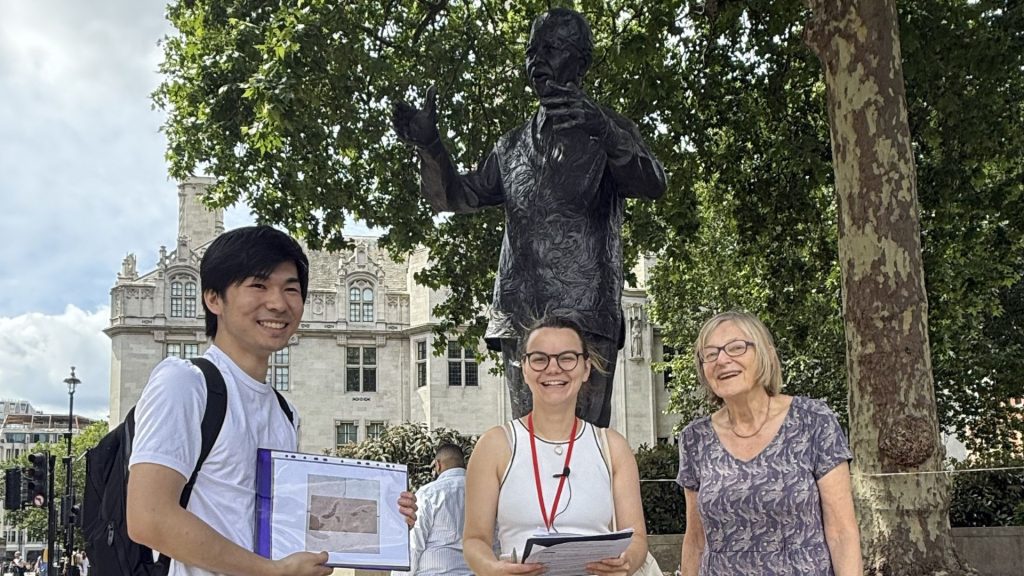
A new walking tour at the British Academy Ideas Festival will transform central London into a living archive of anti-apartheid activism, drawing directly on Dr Natasha Robinson’s Anti-Apartheid London Digital Map project at Oxford University’s Department of Education.
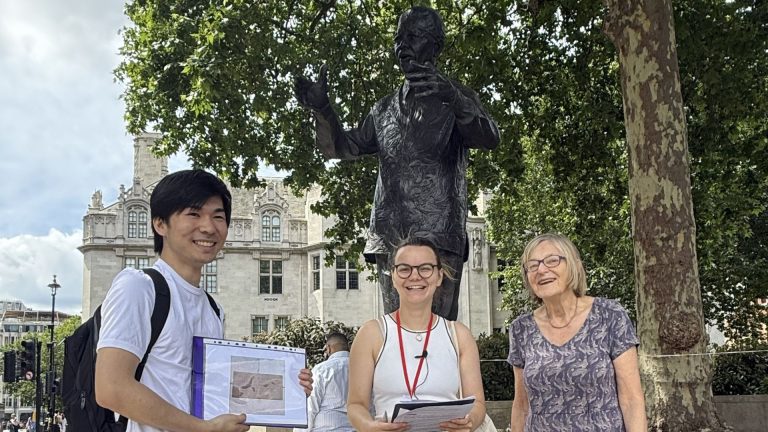
Free Nelson Mandela! Following the footsteps of Britain’s Anti-Apartheid Movement invites participants to walk through key sites linked to decades of political activism and solidarity, tracing how London became a major centre of resistance to apartheid in South Africa.
The tour forms part of a wider digital humanities project developed with the Anti-Apartheid Legacy Centre, mapping the people, protests and organisations that shaped Britain’s Anti-Apartheid Movement.
Natasha’s broader research, including her British Academy project, focuses on teaching histories of conflict and racism.
Using interactive digital mapping, the project uncovers how familiar London streets and buildings became sites of international activism, exile politics and grassroots mobilisation.
Rather than treating anti-apartheid history as something distant or confined to South Africa, the research reveals how deeply the struggle was embedded within British public life, from embassies and churches to government buildings and public squares.
Natasha said: “”One of the aims of the Anti-Apartheid London Digital Map is to show that the struggle against apartheid was not only fought in South Africa but also in cities like London.
“At a time when the right to protest is facing growing restrictions in the UK, the history of Britain’s Anti-Apartheid Movement reminds us that protest has long been an essential part of democratic life.
“The campaigns, boycotts and demonstrations that took place across London helped challenge one of the most unjust political systems of the 20th century, demonstrating local action and international solidarity can contribute to meaningful political change.”
Beginning at the British Academy and moving through sites including Trafalgar Square, Whitehall and Parliament Square, the tour explores campaigns that mobilised public opposition to apartheid across Britain.
Participants will encounter stories of consumer boycotts, protests outside South Africa House, campaigns for political prisoners, and demonstrations demanding Nelson Mandela’s release.
The route also highlights the role of South African exiles, students, trade unionists and community activists in building international pressure against the apartheid regime. At Trafalgar Square, for example, thousands gathered following the Sharpeville Massacre in 1960, while South Africa House became the site of sustained demonstrations and vigils throughout the 1980s.
The event forms part of celebrations marking 40 years of British Academy Postdoctoral Fellowships and showcases how humanities research can connect scholarship with public engagement.
Free Nelson Mandela! Following the footsteps of Britain’s Anti-Apartheid Movement takes place during the British Academy Ideas Festival on Saturday 20 June from 11.30am – 1pm and will be led by tour leader and historian of anti-apartheid heritage Dr Julie Partsch .
Julie and Anti-Apartheid Legacy Centre trustee and Secretary of the Anti-Apartheid Movement Archives Committee Christabel Gurney OBE were involved in designing this iteration of the walking tour based on the Digital Map.
Natasha’s project combines archival research, public history and digital storytelling to preserve these interconnected histories of activism while making them accessible to wider audiences.
The project is delivered through a close partnership between the University of Oxford and the Anti-Apartheid Legacy Centre (AALC), combining academic research with community knowledge and lived experience.
It will support school teaching, public learning and community engagement by grounding global African and liberation histories in familiar local spaces.
Latest
-
 BlogLooking back to look forward: what sixth form students remember learning, and wanted to learn, about climate and net zero in KS3September 30, 2026
 -
 NewsLead the future of AI in education with our new Postgraduate DiplomaSeptember 22, 2026
 -
 BlogEquity is digital? Digital access, physical encounters, and belonging in museumsSeptember 16, 2026