





National study to investigate future of engineering education for the defence sector

‘Engineering the Future of Defence’ is a skills study developed by the University of Oxford’s Centre on Skills, Knowledge and Organisational Performance (SKOPE) in collaboration with Babcock International Group.
The study will bring together government, academia and industry to explore how engineering education can evolve at the pace demanded by rapidly advancing technologies, including artificial intelligence, autonomous systems, cyber security and advanced manufacturing, alongside growth in the defence sector.
Associate Professor James Robson, Director of SKOPE, said: “At SKOPE, our aim is to understand the links between skills and knowledge, performance and productivity, and economic futures, and working alongside Babcock to examine this for the defence sector is already proving to be fertile ground for breakthrough findings.
“We’re deep-diving into the skills ecosystem in defence, and speaking to those studying and preparing for their engineering careers, to uncover what an evolution in defence and engineering skills should look like. Crucially, we’ll also consider what is needed from a policy perspective and from industry leaders to enable this transformation, and set up the defence sector for decades of success.”
The UK’s defence sector faces growing pressure to recruit and retain highly skilled engineers and technical specialists. Yet demand for specialist skills continues to outpace supply, while the speed of technological change increasingly challenges traditional education and training models.
Against this backdrop, the new study will examine the growing gap between engineering curricula and industry requirements. The programme begins with a series of in-depth interviews involving representatives from government, academia and industry, followed by a nationwide survey of UK STEM talent. This will help to gauge the aspirations and challenges future defence engineers face.
Findings will inform a co-authored report by SKOPE and Babcock, due to be published in Autumn 2026, with the aim of contributing to evidence-based policy discussions and strengthening the UK’s long-term engineering capability.
Sir Nick Hine, Chief Growth Officer at Babcock, said: “Defence is undergoing one of the most profound periods of technological transformation in a generation. From autonomous systems and digital engineering to artificial intelligence and advanced manufacturing, the pace of change is accelerating rapidly.
“At the same time, the sector faces a critical challenge: ensuring we have the skills and talent pipeline needed to deliver and sustain these capabilities. This is not a challenge for any one organisation to solve alone.
“Alongside the University of Oxford’s SKOPE research centre, we’re bringing together industry, academia and government to better understand how engineering education and workforce development can evolve to meet future needs.”
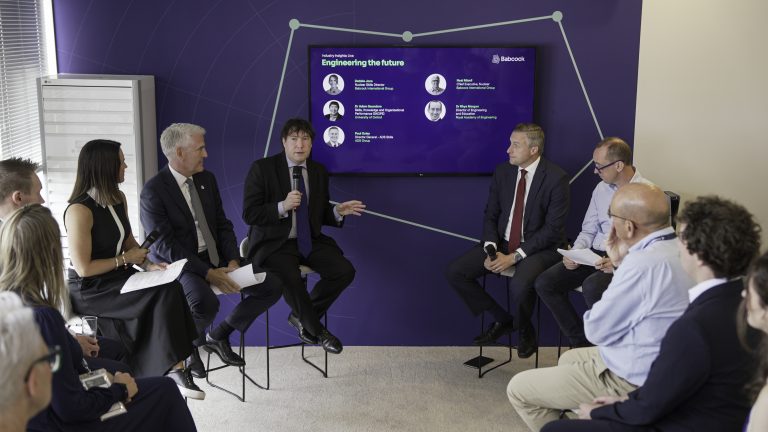
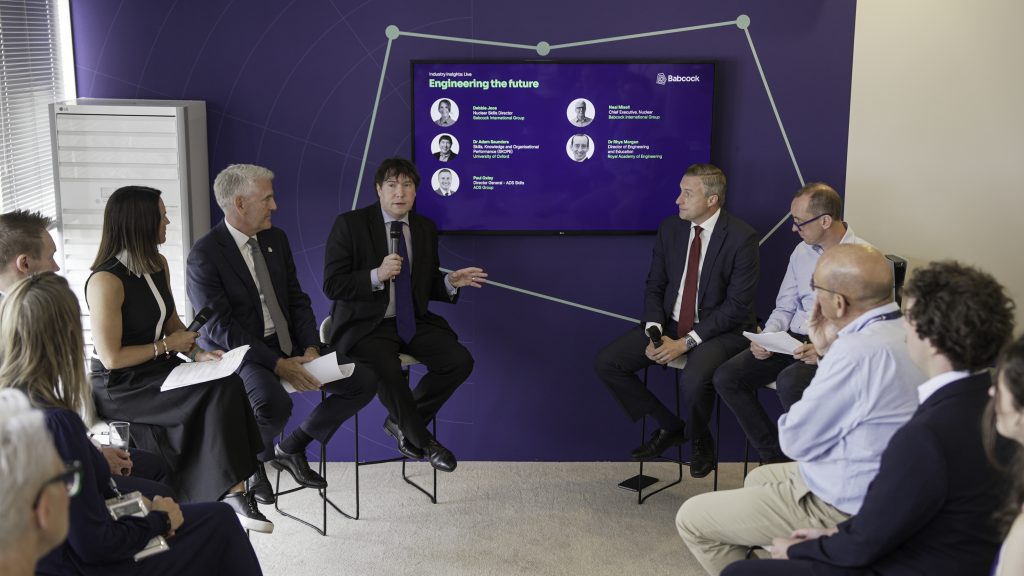
The initiative was introduced during a Farnborough International Airshow panel discussion featuring representatives from Babcock, the University of Oxford, the Royal Academy of Engineering and wider skills stakeholders. The discussion brought together leaders to discuss the evolving skills landscape and the challenges facing the defence industry.
Latest
-
 NewsDr Jason Todd contributes to UNESCO programme on teaching violent pasts in CambodiaOctober 8, 2026
 -
 Staff StoriesBe brave, be bold: Kathy Sylva on following curiosity and teamworkOctober 1, 2026
 -
 BlogLooking back to look forward: what sixth form students remember learning, and wanted to learn, about climate and net zero in KS3September 30, 2026