




New Oxford research network launches to advance education, equity and epistemic justice

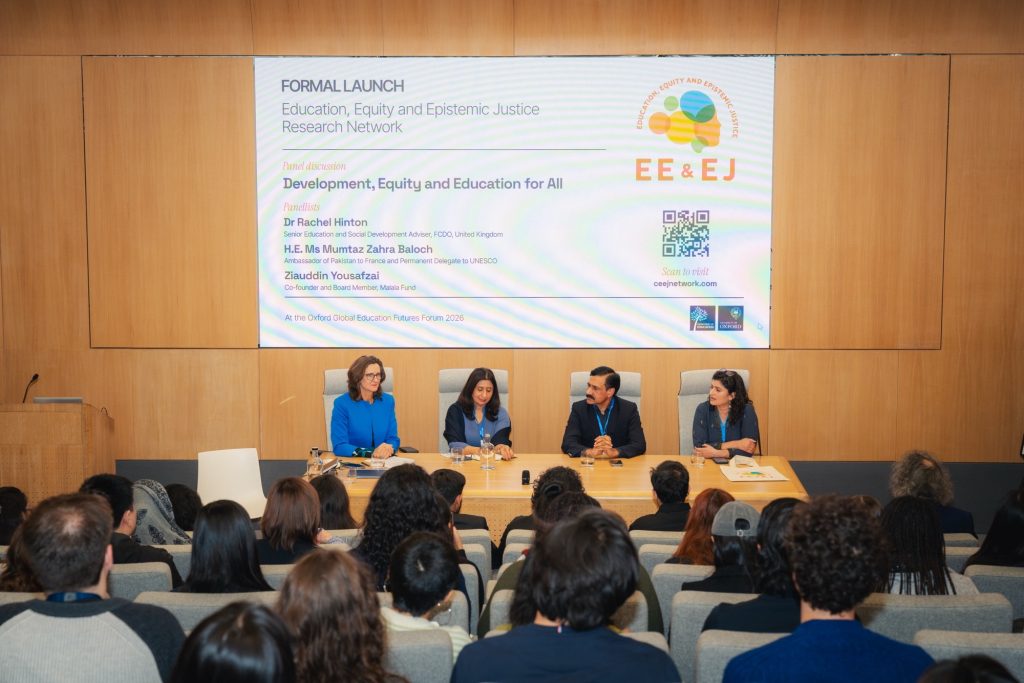
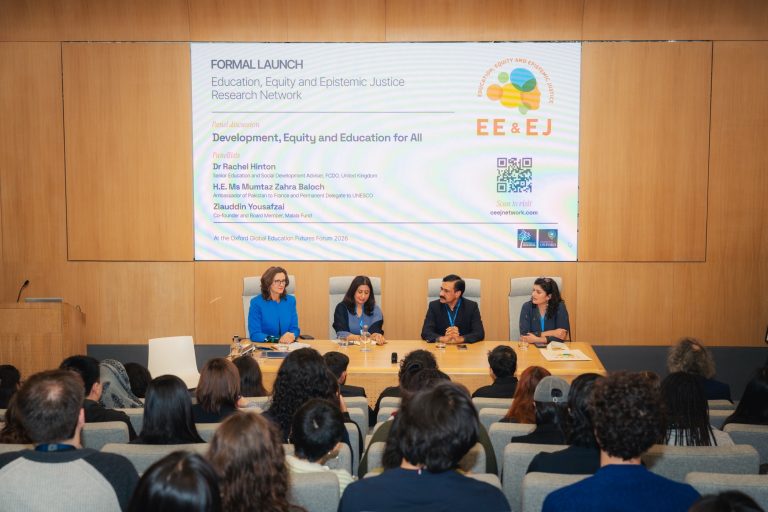
The Education, Equity and Epistemic Justice (EE&EJ) Research Network was officially launched on 20 November at St Antony’s College, as part of the Oxford Global Education Futures Forum 2026.
The event opened with remarks from Professor Leon Feinstein, Director of the Department of Education, followed by comments from Professor Velda Elliott.
The network aims to create a space for international dialogue on educational equity, bringing together researchers, policymakers, practitioners and communities to explore how education systems can become more inclusive and responsive to those they serve.
Speaking about the network’s vision, its convenors said it “makes Oxford home for international conversations about a fair education for every child in which communities and families have a say.”
A highlight of the launch was a panel discussion titled “Development, Equity and Education for All”, moderated by Dr Aliya Khalid.
The panel brought together Dr Rachel Hinton from the UK’s Foreign, Commonwealth and Development Office (FCDO); H.E. Ms Mumtaz Zahra Baloch, Ambassador of Pakistan to France and Permanent Delegate to UNESCO; and Ziauddin Yousafzai, Co-founder of Malala Fund.
Speakers explored questions surrounding whose knowledge influences educational policies and practices, and how education systems can better reach children who have historically been excluded or underserved.
The launch followed the previous day’s Oxford Global Education Futures Forum, which brought together ministers from Sierra Leone and Seychelles, representatives from AFS Intercultural Programs and Oxford researchers to discuss the future of global education.
The EE&EJ Research Network is co-convened by Dr Aliya Khalid, Khansa Maria, Pronita Dutta, Zagham Nawaz, Noora Shuaib, Ramsha Fatima, Rameen Iftikhar and Nadia Talukdar, alongside other collaborators.
Through its activities, the network seeks to foster ongoing conversations and collaborations around education, equity and epistemic justice, with particular attention to whose voices, experiences and knowledge are represented in educational decision-making.
Latest
-
 NewsNew resource helps families turn everyday apps into opportunities for play and learningNovember 19, 2026
-
 NewsDepartment celebrates postgraduate students at annual Awards CeremonyNovember 18, 2026
-
 BlogWhen Stories Become Learning: The Power of Books and TalkNovember 17, 2026