





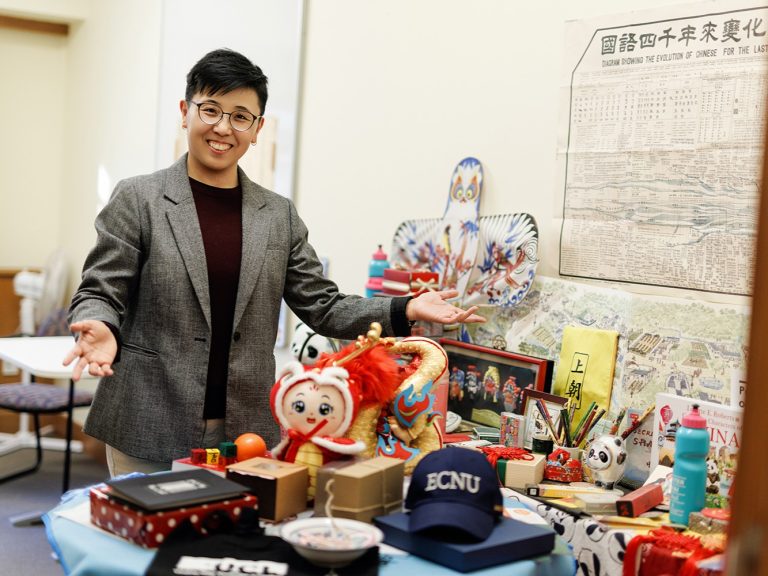

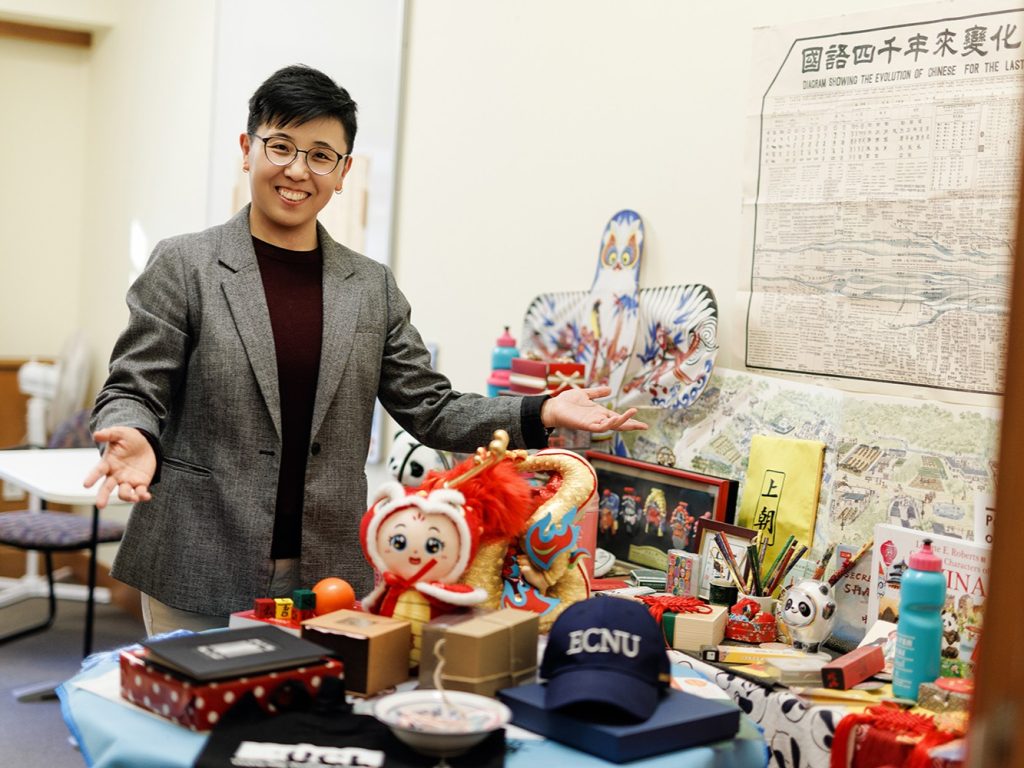
For Danping, learning Chinese is about far more than mastering vocabulary, grammar or characters. It is about connecting people, cultures and communities, creating opportunities and rethinking what language education can mean in an increasingly interconnected world.
It is a belief that has shaped her academic career across three very different educational settings and one that she now brings to the Department of Education as the newly appointed Chair in the Learning and Teaching of Chinese and inaugural Director at the Centre for the Learning and Teaching of Chinese (CLTC).
Her appointment marks the latest chapter in a career dedicated to transforming how Chinese is taught, learned and understood, and an opportunity to bring together research, educational innovation and international collaboration.
A journey across continents
Danping’s academic journey began in Beijing, where she received specialist training in teaching Chinese as a foreign language at a time when interest in Chinese language education was growing internationally.
She subsequently moved to Hong Kong, spending a decade teaching students from diverse linguistic and cultural backgrounds while developing curricula and qualifications for the Hong Kong government.
These experiences gave her an understanding of how approaches to teaching Chinese must respond to the different needs, backgrounds and educational environments of learners.
Her next chapter took her to the University of Auckland in New Zealand, where she became Associate Professor and Head of Chinese. Over the following decade, she led the development of what became the country’s largest university Chinese language programme, while expanding her work into teacher professional development, national curriculum design and educational research.
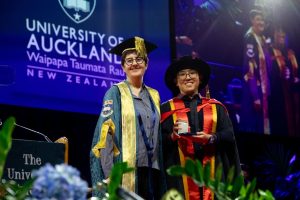
Danping receiving a Teaching Award at the University of Auckland
Her contributions have included work with New Zealand’s Ministry of Education on curriculum development and assessment standards, as well as establishing the Centre for Chinese Language Education and Advanced Research (CLEAR) and the C+AI Lab for Language Education.
Her work now brings together ideas from multilingualism, artificial intelligence, digital innovation and education policy, challenging traditional approaches to language learning and exploring how Chinese can become more meaningful and accessible in different societies.
Why Oxford, and why now?
The opportunity to join Oxford represents a natural progression of the work Danping has developed over the past two decades, but with the potential to achieve impact on a much larger scale.
Having established research initiatives and educational partnerships in New Zealand, she sees significant opportunities to bring together research, teacher development and educational innovation through the Department’s new Centre.
She also recognises important similarities between the challenges facing Chinese language education in New Zealand and the UK, particularly around access, teacher development and the position of Chinese within national education systems.
“What excites me most is the potential to go beyond national boundaries.
“My ambition is to build on Oxford’s global reach and intellectual strengths to establish a Centre with genuine international impact: generating new research, empowering teachers, breaking down disciplinary and institutional boundaries, and ultimately making Chinese a language that anyone, regardless of their background, can confidently learn.”
A new vision for Chinese language education
At the heart of Danping’s ambitions for the Centre is an idea she describes as RE-SET Chinese language education: making it more Sustainable, Equitable and Transformative through innovative Research and Engagement.
This vision reflects her belief that Chinese language education needs to respond to changing societies, emerging technologies and the increasingly diverse backgrounds of learners.
This approach involves reconsidering how Chinese is positioned within education more broadly.
Danping believes that Chinese should not be understood simply as a foreign language subject, but as a living language spoken across diverse societies and communities, with wider relevance to identity, intercultural understanding and social participation.
As education systems evolve, she sees opportunities to rethink who learns Chinese, what meaningful learning looks like and how traditional barriers to participation can be addressed.
Advances in artificial intelligence and digital technologies are among the areas she believes could open up new possibilities for language education. Her research also draws on plurilingual and transdisciplinary approaches, bringing together perspectives from different fields to challenge conventional ways of teaching and learning.
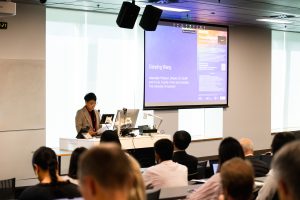
Danping at the AI Leadership Forum
But technology is only one part of the picture.
“Teachers themselves must be central to educational change.
“Teachers should be empowered to become innovators, researchers and leaders, actively shaping the future of their profession rather than simply implementing established curricula.”
Building a Centre with lasting impact
The new Centre for the Learning and Teaching of Chinese, established within Oxford’s Department of Education through a generous gift from John Swire & Sons, provides an opportunity to put these ambitions into practice.
The Centre will bring together research, teacher education and partnerships with schools to strengthen Chinese language teaching and learning across the UK and internationally.
It builds on the work of the Swire Chinese Language Foundation, whose network of 11 Chinese Language Centres currently reaches approximately 21,000 pupils across 134 UK schools.
With a focus on educational access and equality of opportunity, the Centre aims to make high-quality Chinese language education available to more young people, regardless of their background or prior attainment.
Its work will include developing research-informed teaching approaches, strengthening professional development for teachers and supporting new academic programmes, including a dedicated Mandarin PGCE.
Drawing on her experience of establishing research initiatives and educational partnerships in New Zealand, she is particularly interested in creating an environment where collaboration can flourish.
“I am particularly excited about connecting Chinese language education with Oxford’s wider intellectual community, bringing fresh perspectives from multilingualism, technology, education policy and social inclusion into meaningful dialogue.”
She also hopes the Centre will provide opportunities for emerging teachers and researchers, while strengthening connections between academic research and the realities of classroom teaching.

Danping during one of her teaching sessions
Looking to the future
As Danping prepares for this next chapter, she is conscious that the Centre’s ambitions build on the work of many people who have contributed to Chinese language education over the years.
“Although the Centre is new, it builds on decades of hard work of many people that has laid the foundations for its future. I feel deeply privileged to have been entrusted with carrying this legacy forward and building upon it to realise the Centre’s ambitions.”
Her hopes extend beyond establishing a successful academic Centre.
She wants to help create a lasting change in how Chinese language education is understood, supported and experienced, both in the UK and internationally.
That means opening up opportunities for learners from different backgrounds, supporting teachers to become leaders in their field and bringing together research and practice in ways that make a difference beyond the university.
“I hope to build a Centre whose impact will extend well beyond one discipline and my own leadership, that inspires others, creates new opportunities and continues to shape Chinese language education for generations to come.”
The move to Oxford is not simply the next step in an international academic career.
It is an opportunity to bring together the experiences, ideas and partnerships she has developed across continents, and to help shape a future in which Chinese language education is more accessible, inclusive and meaningful for everyone.
Latest
-
 NewsProfessor Danping Wang appointed to Chair in the Learning and Teaching of Chinese and named inaugural Director of new Chinese centreNovember 16, 2026
-
 NewsColleagues conferred title of ProfessorNovember 2, 2026
-
 NewsLeverhulme Early Career Fellowships 2027: Expressions of InterestOctober 28, 2026