
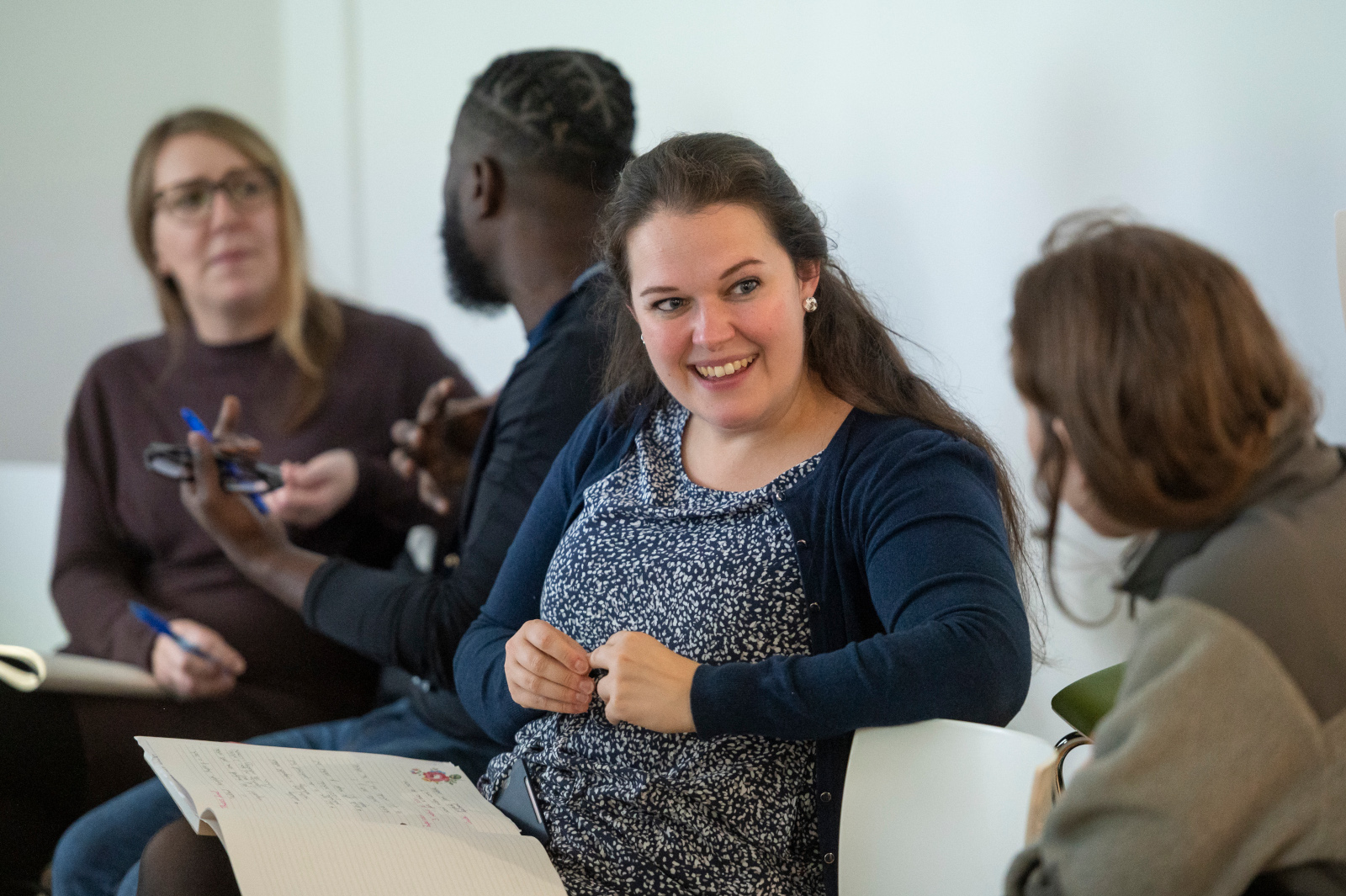

Dr Vivian Látìnwọ̀-Ọlájídé is a Research Fellow in the Department of Education at the University of Oxford, where she contributes to the Reparative Futures of Education (Repair-Ed) project. A transdisciplinary researcher with a foundation in sociology, her work spans relational sociology, the sociology of everyday life, the sociology of the body, the sociology of emotions and critical organisation studies. Her scholarship also engages Afro-feminist praxis, human geography, anthropology and memory studies.
At the centre of her research are two related questions: How do the worlds we inherit come to live within us? And how, through our relations with others, do we come to inhabit and remake worlds in common? Working at the scale of everyday life, she explores how histories become embodied and carried through the ordinary textures of living. She attends particularly to memory and feeling, relationships and intimacies, and domestic and interior life. This draws her towards parts of social experience that existing languages and recognised forms of knowledge do not always adequately hold, including the material and immaterial cultures through which people live together.
These questions also shape her approach to history and the historical record. She is interested in what becomes possible when sociological and historical ways of knowing are brought into relation, and how this changes what we can see, record, and understand about social life. From this perspective, the past is understood not only through what has been formally recorded, but also through histories made in social encounters and carried across time. Beginning from the premise that any record is necessarily incomplete, her work considers how sociology might trouble the boundaries of what counts as historical knowledge. This raises questions about what happens when seemingly minor domestic, embodied, and interior dimensions of life are treated as historically significant rather than as background, and how they might be documented without being stripped from the relations through which they are lived.
She works collaboratively with children, young people, adults and older people across academic, archival, artistic and community contexts. Her research brings together archival records, objects, photography, sound, oral histories and everyday testimony.