





The Project
Increasingly, universities in non-Anglophone countries are teaching through English-medium instruction (EMI) rather than the local language or students’ first language. The rationale for teaching through English is underpinned by the belief that a good command of English will improve students’ career prospects in a globalized world. Crucially, the supposed ‘added value’ of EMI is that students can gain access to the benefits of international higher education without leaving their home country; for example, by choosing to study as international students in the UK. However, these purported linguistic and employment benefits of EMI remain unverified. Moreover, we know very little about how EMI students’ experiences with language learning and transition to work compare with international students in the UK. Thus, taking China and the UK as exemplars, this project will investigate for the first time what ‘added value’ if any is gained through EMI and international university study.
This project employs a two-phased longitudinal study which compares the experiences of EMI students in China with those of international students at UK universities. Phase 1 of the project aims to ascertain the trajectory of students’ language learning and employability skills development on undergraduate EMI programmes in China, in comparison to international undergraduate students at UK universities. Phase 2 then compares the post-graduation experiences of these two cohorts. Data will be collected through narrative interviews and experience sampling methods, and supplemented by quantitative measures, to track participants’ language learning and skill development in their final year of university and transitions to work.
This ambitious project will have implications for research, policy, and practice in the areas of learning, labour, and mobility. It will provide much-needed evidence of how EMI is altering the landscape of international higher education and what, if any, its ‘added value’ is.
Research Team


More News
-
 NewsNew report on educational attainment in school pupils with English as an Additional LanguageFebruary 5, 2025
 -
 NewsReport published today provides evidence on what influences EAL learners to mitigate language learning lossMarch 17, 2021
 -
 NewsElizabeth Wonnacott to join as Associate Professor of Applied LinguisticsApril 14, 2020
 -
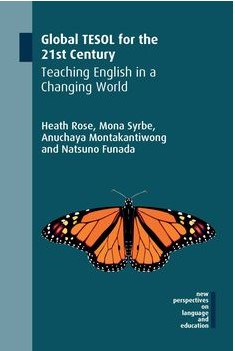 NewsDepartment Academics And Doctoral Students Author New Book On Language Teaching In Global ContextsFebruary 20, 2020
 -
MediaDon’t leave the L1 out of English-taught programs, OUP experts warnFebruary 15, 2019
-
MediaTo learn another language, first nurture your ownJanuary 22, 2019