
STORIES Conference 2026: Power, equity and hope in education amid shifting inequalities

Held on 10 April 2026, this year’s Students’ Ongoing Research in Educational Studies (STORIES) Conference centred on the theme Power, Equity and Hope: Education Amid Shifting Inequalities.
As a student-led initiative within the University of Oxford’s Department of Education, STORIES continues to offer a space where emerging researchers can share their work, engage critically with others, and contribute to conversations that extend across disciplines and global contexts.
The scale and reach of this year’s conference reflected its growing impact. The organising team received over 150 abstract submissions and welcomed more than 300 participants on the day, bringing together a wide range of perspectives, experiences, and research interests.
Shaping the Programme
The programme was developed through a collaborative review process led by the student organising team and particularly by Claire McCann, one of the co-chairs. Submissions were selected with careful attention to quality, relevance, and diversity, with the aim of building a programme that felt both coherent and representative of the field.
The final conference featured eight panel discussions with 36 individual presentations, organised across four parallel sessions, alongside keynote and plenary moments that brought participants together throughout the day. This structure allowed for both focused engagement within smaller groups and shared reflection across the wider conference.
This year’s sub-themes, ranging from education in contexts of crisis and uncertainty to inclusion, disability, and educational justice, provided a clear thread across the programme. While diverse in focus, the panels were united by a shared concern with how power and inequality operate within educational systems and experiences.
A Day of Global Research and Conversation
The conference opened with a welcome and departmental address by Professor Velda Elliott, the Director for Graduate Studies, setting the tone for a day grounded in critical engagement and collaborative exchange.
The first set of panels explored issues of gender, care, and structural inequality, alongside questions of policy and governance. Presentations examined how access to education does not necessarily lead to inclusion, highlighting the ways institutions can reproduce inequality even while expanding opportunity.
Later sessions moved into questions of voice, participation, and belonging. Research on literacy in marginalised communities, student voice in language education, and experiences of international mobility demonstrated how educational experiences are shaped by broader social and cultural dynamics.
Across the afternoon panels, discussions turned towards technology, pedagogy, and emerging forms of inequality. A strong focus on artificial intelligence ran through multiple sessions, with presenters exploring both its potential and its limitations. Rather than treating technology as inherently transformative, many contributions highlighted how digital tools can reproduce existing inequalities if not critically engaged with.
The final panels of the day focused on crisis, conflict, and educational resilience, as well as community, health, and social justice. These sessions brought attention to education in contexts shaped by instability, environmental challenges, and systemic marginalisation, reinforcing the global scope of the conference.
Keynote and Plenary Sessions
The keynote sessions provided important moments of shared reflection across the day.
Dr Uma Pradhan, Associate Professor from University College London and the Deputy Programme Leader of Education, Culture, and Society (also UCL) opened the keynote programme with a session that encouraged participants to think critically about equity and representation in education. Her address resonated across panels, with many participants returning to these ideas in later discussions.
In the afternoon, Dr David Mills, Associate Professor and Director of the Centre for Global Higher Education (CGHE) delivered the second keynote, offering reflections on academic practice, research development, and the realities of navigating academic pathways. His session was particularly meaningful for postgraduate researchers at different stages of their journeys because it invited them to reimagine academia from an alternative lens.
The conference concluded with final reflections that drew together key themes from across the day and reflected on the role of engaged scholarship in addressing educational inequality.
Reflections and Community
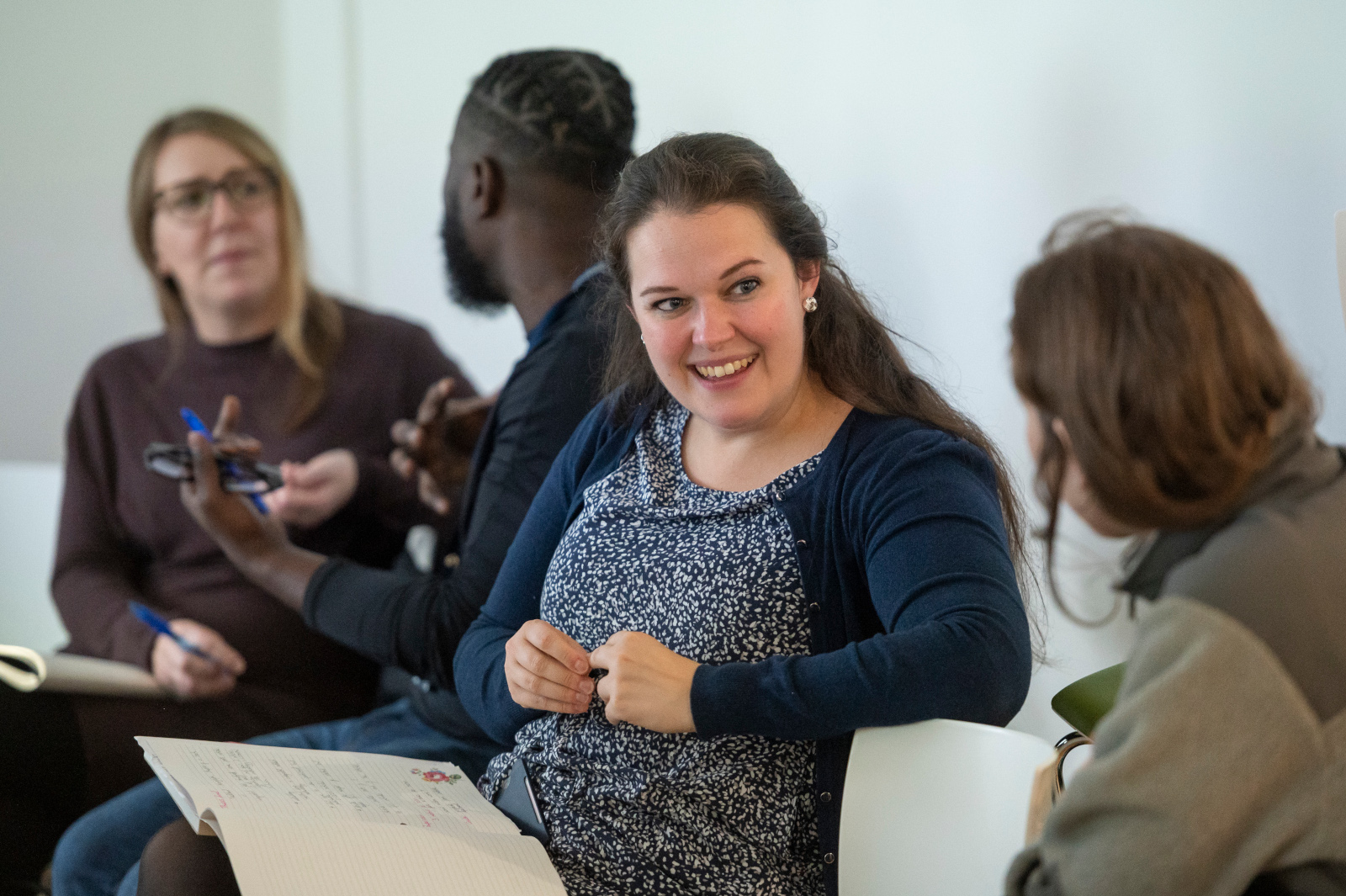
What stood out throughout STORIES 2026 was the level of engagement across sessions. Discussions were active and thoughtful, with participants building on each other’s ideas and making connections across different areas of research.
For many presenters, the conference provided an opportunity to share work in progress in a supportive but intellectually rigorous environment. For others, it offered a space to engage with new perspectives and reflect more deeply on their own work.
As one participant, Veronika Abidan, reflected:
“I am genuinely awe-stricken by what a student-led academic space can look like when it is built with care, intellectual seriousness, and collective purpose. Every presentation felt thoughtfully selected, carefully themed, and generously moderated by a remarkable level of academic rigour. Equally striking was the attentiveness to people, stories, and lived realities. My mind feels intellectually stimulated, fed, and now left with much to explore and reflect upon.”
Her reflection captures something central to this year’s conference, not only the quality of the research, but also the sense of care and intentionality that shaped the day.
Acknowledgements
The success of STORIES 2026 would not have been possible without the collective effort of a dedicated student organising team. We extend our sincere thanks to all those involved across operations, communications, and programme review, whose work ensured the conference ran smoothly from start to finish.
We are especially grateful to the Conference Co-Chairs, Pronita Dutta and Claire McCann, for their leadership, coordination, and continued support throughout the planning and delivery of the event.
Looking Ahead
STORIES continues to grow as a platform for postgraduate-led research and global academic exchange. This year’s conference highlighted the importance of creating spaces where emerging researchers can engage critically with issues of power and inequality, while also contributing to conversations about change and possibility.
As the conference moves forward, the focus remains on strengthening these connections, expanding participation, and continuing to support early-career researchers.
At its core, STORIES remains committed to creating a space where research can be shared openly, ideas can be tested, and conversations can continue beyond the conference itself.
Written by Khansa Maria.
Latest
-
 BlogTogether for Developmental Language DisorderOctober 13, 2026
 -
 BlogLooking back to look forward: what sixth form students remember learning, and wanted to learn, about climate and net zero in KS3September 30, 2026
 -
 BlogEquity is digital? Digital access, physical encounters, and belonging in museumsSeptember 16, 2026