
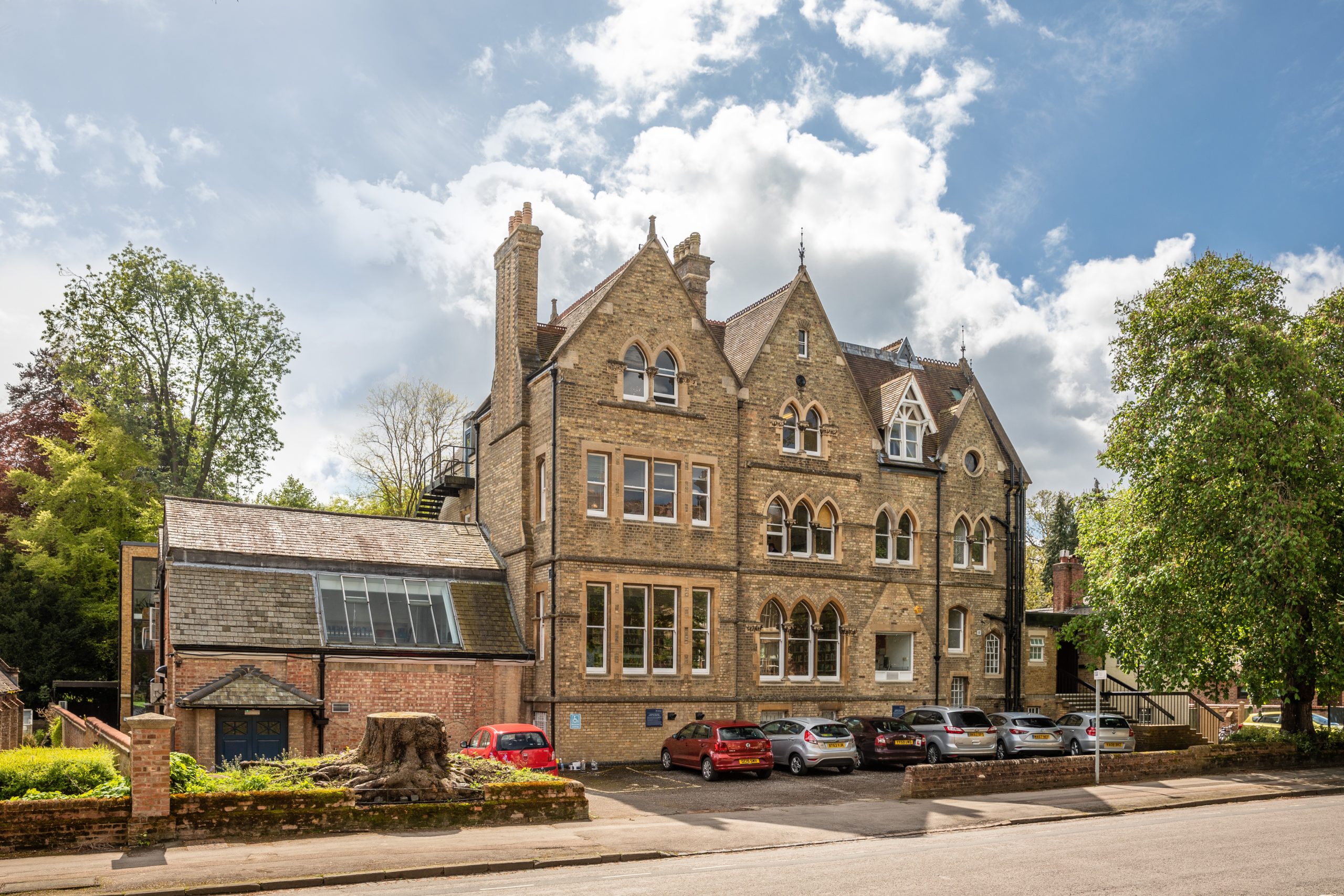




The Project
This project will establish an evidence base centered around the experiences of relationships between research professionals and academics at the University of Oxford, as an institutional case study. Good relationships between stakeholders are the foundation of a positive research culture, which forms a primary area of interest for research assessment and institutional strategic priorities in the coming Research Assessment Framework (REF) cycle. Up-to-date experiential evidence in the depth required to make substantial conclusions about the relationship between personal interactions between staff and research culture is currently lacking in depth and coverage (Caldwell, 2022; Pilgrim-Brown, 2025).
By better understanding these relationships, and the mechanisms that lead to positive working relationships, this project will suggest future improvements to research culture at Oxford. This JFF project provides a rigorous blueprint for future funding, to expand the project to other UK institutions. It will aim to form a rigorous dataset from which robust conclusions can be made. It could hence have significant impact both to improve the working relationships, wellbeing and career satisfaction of colleagues within HE and to develop a rigorous, objective, data-informed understanding of RC. The project builds on doctoral research which scoped the experiences of Professional Services Staff (PSS) in UK HE. It found an absence of experience-led research with PSS colleagues and that relationships between PSS and academics are often tense and difficult to manage (Pilgrim-Brown, 2023; 2024).
This non-representative study was small-scale (13 participants, eight UK universities) and did not include academic perspectives. This JFF project will create an in-depth institutional case study, exploring this element of RC from both standpoints. This John Fell Fund project will use collaborative storytelling methodology as utilised by Davis in his working with academics of working-class heritage (2023). In so doing it will collect data from 10 different focus groups (5-7 participants across departments, divisions, levels of seniority) and encourage a reflective dialogue.

More News
-
 NewsCentre for Global Higher Education director on what to expect at the 11th Annual Conference 2026December 18, 2025
 -
 NewsSimon Marginson shares his highlights at CGHE as he steps down as Director in MayMay 24, 2024
 -
 NewsThe Centre for Global Higher Education awarded ESRC legacy centre funding for 5 yearsMarch 4, 2024
 -
 NewsYour input matters. Participate in our communication feedback survey!February 5, 2024
 -
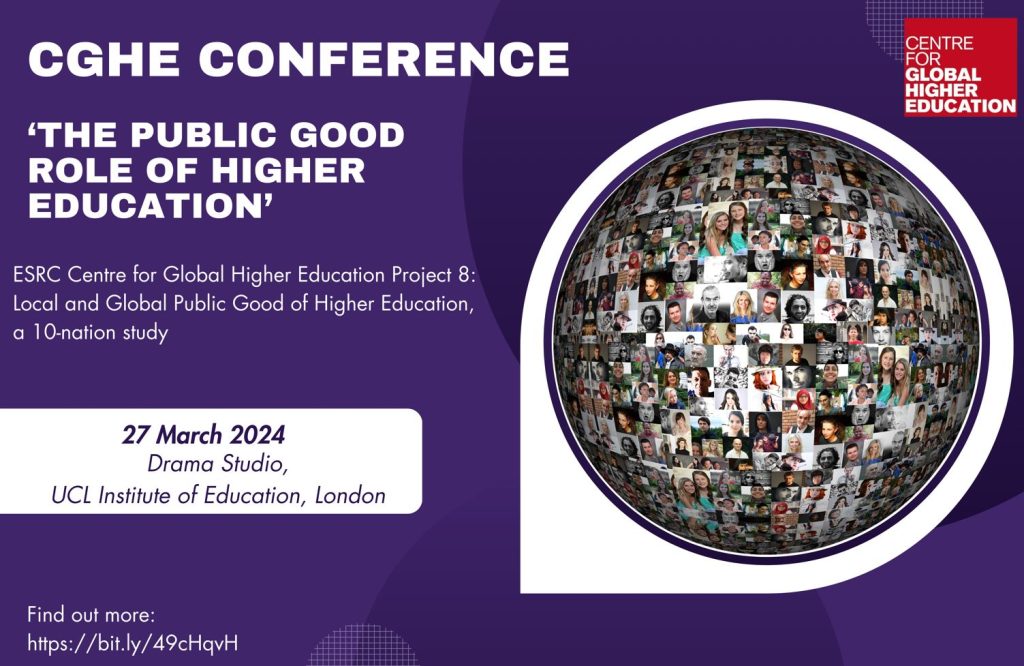 NewsJoin us for CGHE Conference on ‘The public good role of higher education’January 30, 2024
 -
 NewsProfessor Simon Marginson elected a Fellow of the British AcademyJuly 21, 2023