
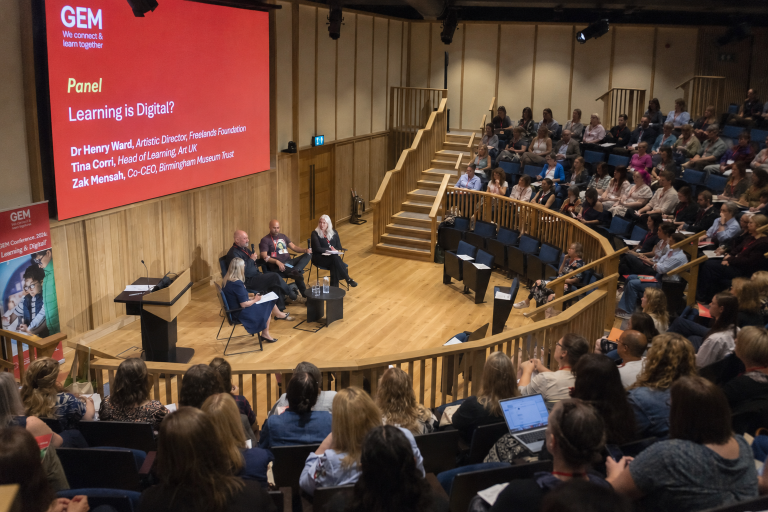
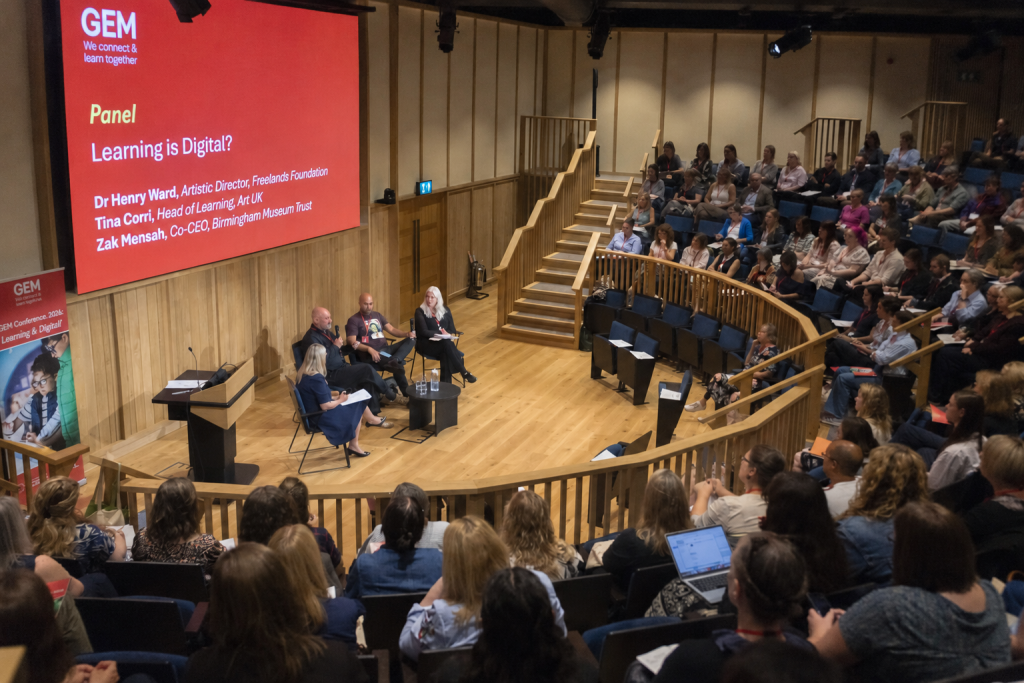
Equity is digital? Digital access, physical encounters, and belonging in museums

There were some innovative examples of museums using technology to reach people beyond their physical walls. Historic Royal Palaces, for example, has developed a virtual tour of the Tower of London, allowing pupils to explore the site and its history without having to travel there. The Jewish Museum London has developed an extensive digital learning offer, providing ways for schools to engage with its collections and stories beyond a traditional museum visit. And the Science Museum Group’s Wonderlab+ is specifically designed to engage young people and their families, with low and middle science capital, using resources and experiences to make science relevant and fun.
Although these projects are very different, a common motivation behind much of the digital work discussed at the conference was equity.
For schools and families, visiting museums isn’t always straightforward. Travel is expensive. School budgets are stretched. Distance matters. There are practical barriers to taking a class out for a day, and there are cultural and social barriers too. For some children, a museum visit may simply not be something that happens as part of family or school life.
Digital learning offers museums an extraordinary opportunity to overcome some of those barriers. Museums can take their knowledge and collections to children rather than waiting for children to come to them. This has enormous potential to increase equity and remove barriers to knowledge. However, it also raises questions about the limitations of digital museum experiences and the importance of physical interactions with people and objects.
More than knowledge
Reflecting the question mark in the conference title, many of the presentations I heard were notably thoughtful about the limitations of digital experiences. Repeatedly, speakers returned to the importance of physical encounters, human relationships, and real objects.
There is a materiality to museums that cannot be completely reproduced on a screen: the scale of something, its texture and physical presence, the knowledge that this is the object itself rather than an image of it. But there is another element of the physical museum experience whose importance museum practitioners repeatedly emphasised: other people.
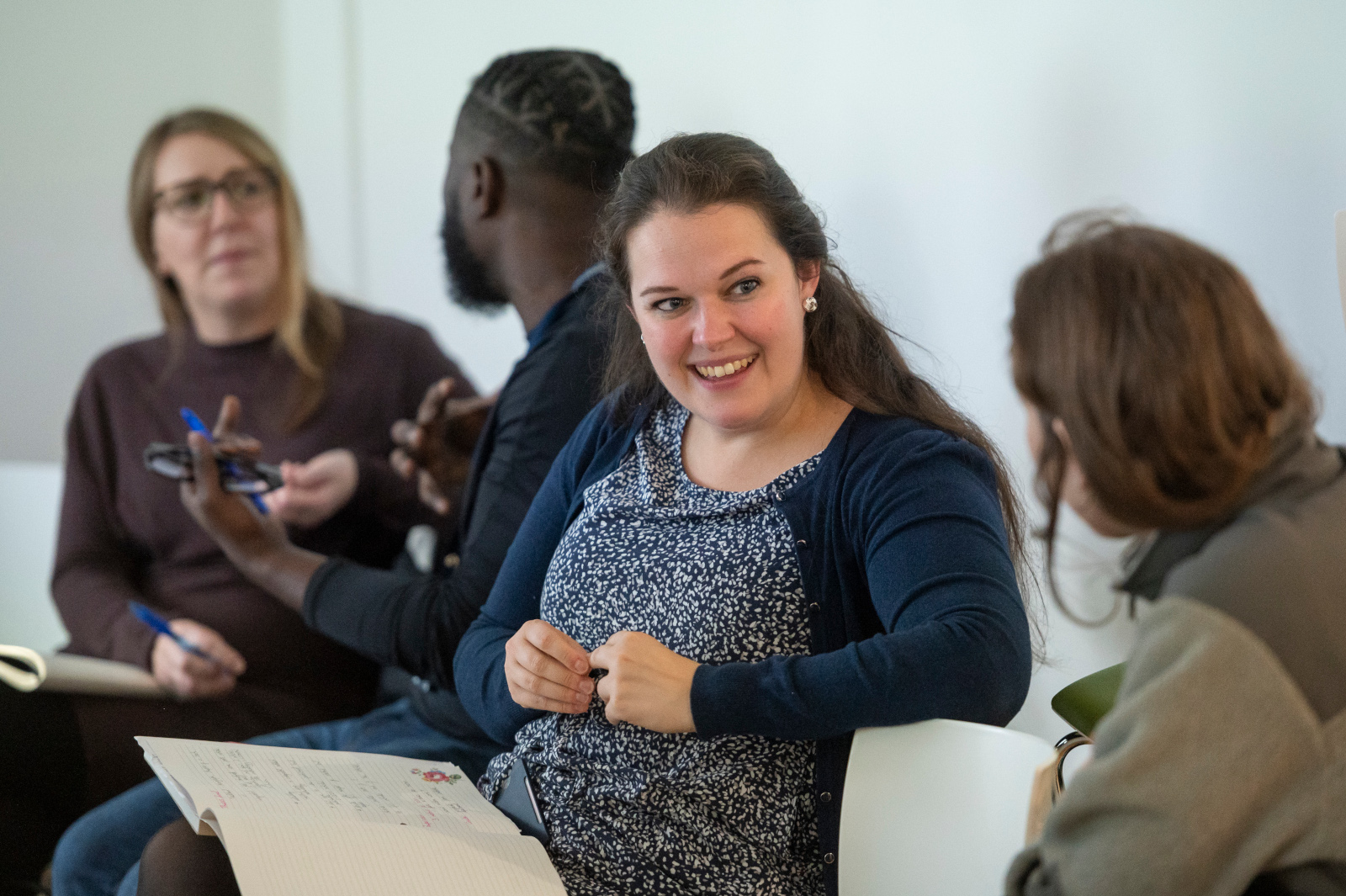
Our own preliminary research, in partnership with Art Explora, is beginning to suggest that interaction with others may be an important part of developing confidence in museums. Talking to peers, sharing observations, asking questions, hearing another interpretation, and interacting with adults can all be part of learning how to occupy a museum space.
Perhaps this suggests that we need to differentiate between access to culture, and confidence within cultural spaces.
Digital provision can give a child access to an object, a story, or an expert that might otherwise be completely inaccessible to them. That is valuable, but it isn’t necessarily the same experience as walking into a museum and gradually becoming comfortable with being there: looking closely at an unfamiliar object, offering an opinion, asking a question, talking about what you see, and learning that your interpretation has a place in the conversation.
If those social experiences are important in developing confidence, there is an equity question here too.
We rightly invest in digital resources that allow children who face barriers to visiting museums to access collections from their classrooms and homes. But should broadening participation also mean investing in overcoming the barriers that prevent them from physically entering museums in the first place?
Bridging digital and physical
Some of the projects discussed at the conference suggested that digital and physical learning don’t necessarily need to sit on opposite sides of this debate.
The National Trust for Scotland’s Timesliders at Drum Castle, for example, uses technology as part of an experience that encourages children to engage with the physical environment and with one another. Rather than technology becoming the destination, it becomes a tool for exploring the space around it.
This is also what makes initiatives such as Art Explora’s Time Odyssey interesting.
Time Odyssey combines a technology-enabled experience with a physical museum visit. Art Explora funds transport to help participating schools overcome one of the most basic barriers to museum access: getting there. Once inside the museum, digital technology becomes part of the experience, but not a replacement for it. Children explore the collection, encounter objects and work with each other and adults as part of the activity.
Perhaps the question isn’t whether museum learning should be digital or physical. Perhaps it is about being clearer about what we want digital technology to achieve.
Sometimes the most equitable thing a museum can do will be to take its collections and expertise beyond its walls, allowing children to participate wherever they are. But we should perhaps be cautious about assuming that access to digital content provides everything that a physical museum experience can offer.
If objects, conversations, relationships and the experience of occupying these spaces are part of how people develop confidence and a sense of belonging in museums, then broadening participation also means thinking about who gets to experience those things.
The challenge, then, may be to use digital innovation not only to take museums out into the classroom or home, but also to create new routes into them.
Ultimately, perhaps the ambition should not only be for more people to have access to the knowledge museums hold, but for more people to feel that museums are places where they can participate, contribute, and belong.
Written by Dr Sophie Thompson-Lee
Latest
-
 BlogLooking back to look forward: what sixth form students remember learning, and wanted to learn, about climate and net zero in KS3September 30, 2026
 -
 BlogSEND Case Officers and provision for children and familiesSeptember 7, 2026
 -
 BlogReimagining partnerships: An intellectual encounter between African university leadership and global higher education researchAugust 11, 2026