


Net zero education in the UK and Australia: A force for hope and inspiration this World Environment Day

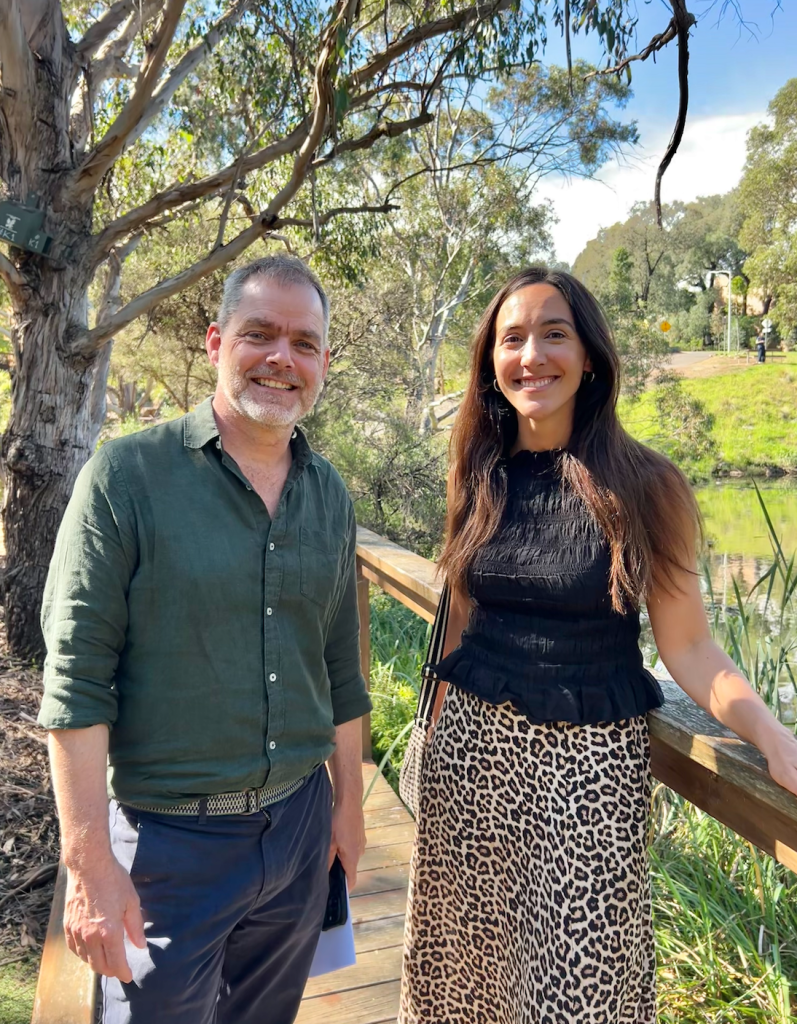
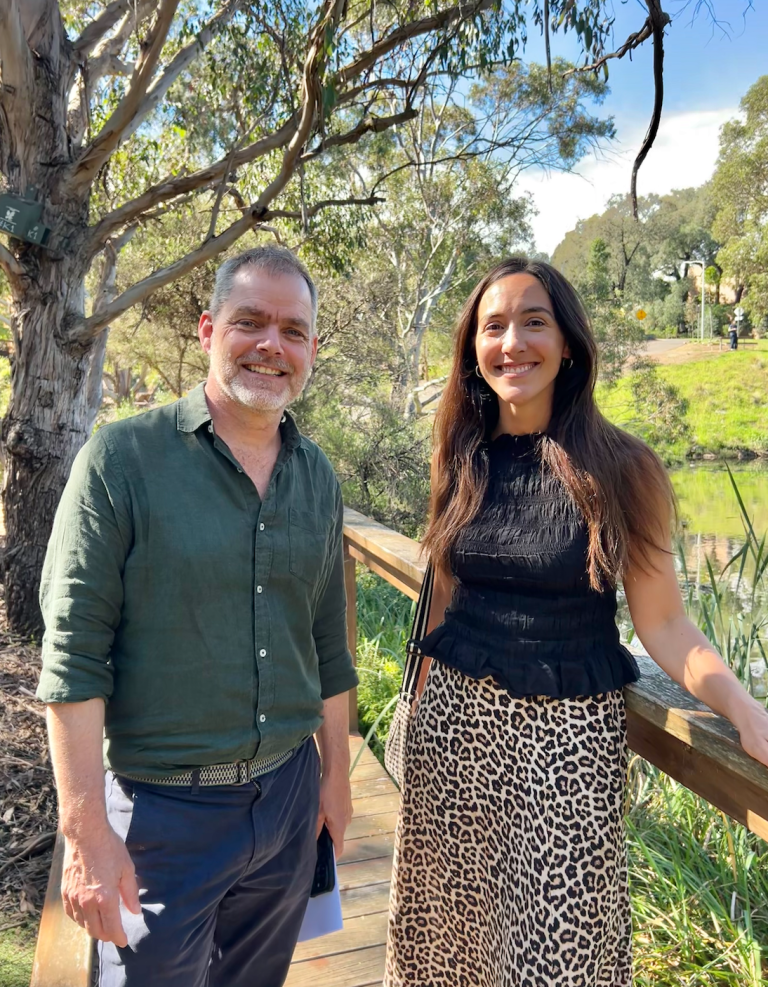
Earlier this year, I arrived in Melbourne as a visiting researcher at Monash’s Faculty of Education, jet-lagged and slightly startled by the heat. I’d come to work with Professor Alan Reid on a question that had been following me across two hemispheres: if governments in both the UK (DESNZ, 2019) and Australia (DCCEEW, 2024) have made bold commitments to net zero, why does it so often feel like schools are left to figure out what that actually means on their own?
Between us, we bring perspectives from two national contexts – Alan’s work on net zero schools in Australia, and my own research through the NetZeroED project at the University of Oxford’s Department of Education, which has been tracing how climate and sustainability policy lands (or doesn’t) in English secondary classrooms. What we found when we put these perspectives side by side was striking: the challenges are remarkably similar, but so are the pockets of quiet, determined brilliance happening in schools and classrooms on both sides of the world.
Here are five things we think each country can learn from the other.
- Australia’s curriculum gives sustainability more structural weight – but the gap is narrowing
In Australia, sustainability is one of three cross-curriculum priorities embedded across all learning areas of the national curriculum framework (ACARA, 2026), sitting alongside Aboriginal and Torres Strait Islander Histories and Cultures, and Asia and Australia’s Engagement with Asia. This means that, on paper at least, sustainability is not the preserve of solely science and geography teachers: it has formal reach across every subject (Gough et al., 2025). However, ‘net zero’ is yet to make a formal appearance within the curriculum (Stevenson et al., 2024).
In England, the picture has been more fragmented. Climate change has historically appeared in the National Curriculum mainly within Science and Geography at Key Stage 3, without requiring students to grapple with its broader social, economic or justice dimensions (Kulakiewicz et al., 2021). Net zero currently does not appear within the national curriculum. It is also worth noting that academies and free schools, which now make up the majority of secondary schools in England, are not required to follow the National Curriculum at all, making provision even more uneven in practice (Dunlop & Rushton, 2022). Teachers in our NetZeroED research frequently described feeling like they were swimming against the tide: enthusiastic about bringing climate into their classrooms, but without the structural backing to make it stick.
That said, this is a comparison in motion. England is actively reforming: the recent Curriculum and Assessment Review (2025) explicitly identified the low visibility of climate change as a barrier, and the government has since confirmed plans to embed climate and sustainability more explicitly across subjects and key stages. We in the NetZeroEd team at Oxford are also working with the Department for Education to ensure that Net Zero is also considered as part of this review. It is worth acknowledging that within the UK, Scotland and Wales have already developed stronger cross-curricular frameworks for sustainability than England – although again, Net Zero is absent.
- The curriculum is one thing – however research on the implementation of climate (and net zero) education in both contexts makes it clear that alone it is not enough
Whilst the curriculum review in England is welcome, it is worth taking a step back and asking – is curricular reform alone the key to the net zero (and broader climate education) challenge? In Australia, the cross-curriculum priority, though well-designed, is not formally assessed, and research consistently finds its implementation to be uneven across schools (Gough et al., 2025). Barriers that have been reported include lack of teacher and administration commitment, lack of time, and an already overcrowded curriculum, which will all sound very familiar to educators working within the English context (Glackin & Greer, 2025).
As long ago as 2008, Ofsted found that work on sustainability within English schools tended to be uncoordinated, often confined to extra-curricula activities, and its impact tended to be short-lived and limited to small groups of pupils (Ofsted, 2008). More recent research from the context paints a more nuanced picture. For example, a recent national survey of over 700 teachers in England found that school leadership was recognised as an important enabler, specifically the extent to which leaders understood climate change and sustainability as a whole-school priority (Greer et al., 2025). That suggests the situation in England is variable, not uniformly poor.
Our Oxford NetZeroEd project findings corroborate this pattern – we visited 20 schools across England to observe lessons relating to climate in a range of subjects, from Geography to Science to Computer Science and Art, and interviewed over 35 teachers, finding that net zero appears rarely within Key Stage 3 classrooms (for pupils between 11 and 14). Teachers spoke of feeling isolated and lacking in enough professional development and support to fully realise their climate and environmental education ambitions.
Clearly, more needs to be done in both the UK and Australia to support educators to bring about the Net Zero, climate positive future that we desperately need.
- Despite challenges, however, teachers in both Australia and England are going above and beyond to bring climate, and net zero, into their classrooms
Through speaking to environmental education colleagues during my time in Australia – including Rosie Welch at Monash University, John Quay at University of Melbourne, and Kim Beasy at the University of Tasmania – it became clear to me that net zero is as absent in schools here as it is in the UK, if not more (although more research is needed to confirm whether this is in fact the case). As Kim put it, “net zero is very much seen as an industry term in Australia, rather than an educational one”.
However, all of the researchers that I met shared stories of inspiring Australian teachers who despite the challenges are working hard to make the climate education that our young people deserve a reality. Hannah Kirk who is based at the Turner Institute pointed me in the direction of the great work of Elwood Primary school, and Amelia Pearson and Lucy Richardson from the Monash Climate Communication Research Hub shared the success and expansion of their Climate Classrooms project.
Meanwhile back in England, the teachers involved in the NetZeroEd project spoke of how they had created green careers programmes, project-based learning around food systems where students got to grow their own carrots and potatoes, engaged in carbon calculating projects using the trees in the school grounds, and so much more.
There is a wealth of carbon positive, nature positive education going on in schools in England and Australia – how could alliances be set up across the two contexts to share examples of best practice and inspire one another? This is something I have been thinking about a lot since my return to the UK. The start of a new collaborative project between Oxford and Monash perhaps?
- The transformative potential of whole school approaches are at the heart of net zero education
What makes the focus on net zero in education particularly exciting for Alan and I, as well as others, is the way that it broadens the lens beyond curriculum content to encompass the whole institution. As Alan (Reid, 2024) argues, schools that engage with net zero as a whole-school endeavour, by rethinking energy, food, transport, and waste together, create conditions for deeper, more sustained learning than curriculum alone can achieve. Australia has a long history of national whole-school programmes in this space: the Australian Sustainable Schools Initiative (AuSSI) was a flagship government policy in the early 2000s, aiming to build systemic change across all eight state and territory education systems. In England, Finnegan (2023) has shown how the most effective approaches go beyond whole-school models to embed sustainability in the everyday social practices of school life.
The case for pursuing net zero at a whole-school level is compelling across multiple dimensions. In a TeachSpace article for Monash University to commemorate Earth Day (22 April), Alan and I illustrate these as follows:
Environmental gains: Integrating passive design strategies and renewable energy systems can reduce school energy costs by nearly 30% across a range of climates (Hu, 2017; Finnegan, 2023), and in the UK alone, schools adopting energy efficiency measures could prevent the release of 625,000 tonnes of CO₂ annually (Mohamed et al., 2021).
Health and well-being: Poor indoor environment quality (IEQ) is associated with higher absenteeism and lower academic performance (Hu, 2017), and net zero schools — with improved ventilation, thermal comfort, and natural light — have been linked to better health outcomes and student engagement (Hu, 2017; Finnegan, 2023).
Economic advantages: Schools in the US spend over $8 billion annually on energy, often more than on textbooks (Hu, 2017); schools participating in low-carbon pilot programmes have achieved average carbon reductions of 20% and operational cost savings of around 15%, frequently with minimal upfront investment (Odell et al. 2021).
Educational tools: Net zero schools can function as living laboratories, where sustainability is tangible rather than abstract: pre-service teachers working in such schools have reported that integrating a building’s sustainable features into lesson plans deepens students’ understanding of climate change and their own agency within it (Murley et al., 2017), and may also open pathways toward green skills and careers in the clean economy (Finnegan, 2023; Es-sakali et al., 2025).
I have seen some of these benefits myself first-hand whilst visiting schools across England for the Net Zero education project. Meanwhile in Australia, Alan highlights the work of Albert Park Kinder, Albert Park Primary School and Albert Park College, who with the support of the City of Port Phillip, are on a journey to becoming the first carbon neutral education precinct in Australia (Port Phillip Eco Centre, n.d.). ResourceSmart Schools is a free program offered by Sustainability Victoria that supports Victorian schools to embed sustainability across the school facilities, community and curriculum, while saving resources and money for the school. In the UK, Let’s Go Zero offers similar support.
Curriculum reform matters, but whole-school approaches — where net zero is embedded in leadership, infrastructure, pedagogy and daily practice — are where the most transformative educational outcomes emerge.
- Net Zero schools make climate and environmental education a community affair
The educational benefits of net zero schools also extend beyond the school walls. Net zero schools do not exist in isolation: their impact can ripple outward into the communities they serve. The visibility of a school’s sustainability journey, whether through solar panels on the roof, a composting scheme in the canteen, or student-led energy audits, can inspire local residents and future generations to adopt similar practices, amplifying the reach of sustainability efforts well beyond the school gates (Hu, 2017; Finnegan, 2023). As Dolphin et al. (2023) argue, a genuine commitment to net zero requires a backward induction approach to climate policy — starting from the endpoint and working systematically toward it — and schools that model this kind of purposeful, joined-up thinking offer a powerful template for their wider communities.
The integration of sustainability into school curricula and culture can also empower students to become advocates for climate action in their own lives and neighbourhoods. In this sense, net zero schools are not just educational institutions but community anchors: places that demonstrate responsible use of public resources, showcase what climate-conscious institutions look like in practice, and inspire others to follow suit (Hu, 2017; Finnegan, 2023).
One of the schools that I visited in England for the Net Zero Ed project that demonstrated this to the greatest extent is located close to the Great Fens project – a large-scale nature restoration project on peatland in South-East England. This school had developed links with the project, with the wider community and school developing initiatives that furthered both of their goals together.
The theme of World Environment Day 2026 is “Inspired by Nature. For Climate. For Our Future”. Perhaps nowhere is that message more tangibly embodied than in a school community that has taken ownership of its own future, both in relation to energy and social and ecological resilience.
This work was supported by the Natural Environment Research Council (NERC) NE/W004976/1 as part of the Agile Initiative at the Oxford Martin School.
Written by Isobel Talks (University of Oxford) and Alan Reid (Monash University)
References
ACARA (2026) Australian Curriculum, Assessment and Reporting Authority (ACARA). Cross-curriculum priorities: Sustainability. Sustainability is one of three cross-curriculum priorities embedded across all learning areas in the Australian Curriculum (Version 9). The other two priorities are Aboriginal and Torres Strait Islander Histories and Cultures, and Asia and Australia’s Engagement with Asia. https://www.australiancurriculum.edu.au/help/cross-curriculum-priorities
Al-Saadi, A., Al-Saadi, S., Khan, H., Al-Hashim, A., & Al-Khatri, H. (2023). Judicious design solutions for zero energy school buildings in hot climates. Solar Energy, 264, Article 112050. https://doi.org/10.1016/j.solener.2023.112050
Department of Climate Change, Energy, the Environment and Water (DCCEEW) (2024) Net Zero. Australian Government. Available at: https://www.dcceew.gov.au/climate-change/emissions-reduction/net-zero (Accessed: 31 March 2026).
Department for Education. Curriculum and Assessment Review (2025) Building a world-class curriculum for all: Final report, [online], Available at: https://assets.publishing.service.gov.uk/media/690b96bbc22e4ed8b051854d/Curriculum_and_Assessment_Review_final_report_-_Building_a_world-class_curriculum_for_all.pdf, [Accessed 6th April 2026]
DESNZ (2019) UK becomes first major economy to pass net zero emissions law. HM Government. Available at: https://www.gov.uk/government/news/uk-becomes-first-major-economy-to-pass-net-zero-emissions-law [Accessed 31 March 2026]
Dolphin, G., Pahle, M., Burtraw, D., & Kosch, M. (2023). A net-zero target compels a backward induction approach to climate policy. Nature Climate Change, 13(10), 1033-1041. https://doi.org/10.1038/s41558-023-01798-y
Dunlop, L. & Rushton, E. A. C. (2022). Putting climate change at the heart of education: Is England’s strategy a placebo for policy?. British Educational Research Journal, 48, 1083–1101. https://doi.org/10.1002/berj.3816
Es-sakali, N., Pfafferott, J., Mghazli, M. O., & Cherkaoui, M. (2025). Towards climate-responsive net zero energy rural schools: A multi-objective passive design optimization with bio-based insulations, shading, and roof vegetation. Sustainable Cities and Society, 120, Article 106142. https://doi.org/10.1016/j.scs.2025.106142
Finnegan, W. (2023). Beyond whole-school approaches to sustainability: Social practices and practice architectures at secondary schools in England. Energy Research & Social Science, 102, 103186. https://doi.org/10.1016/j.erss.2023.103186
Glackin, M., & Greer, K. (2025). Bringing to Life the Qualities of a Meaningful Transformative Education. Australian Journal of Environmental Education, 41(4), 758-773. https://doi.org/10.1017/aee.2024.75
Gough, A., Reid, A., & Stevenson, R. B. (2025). Status, Trends and Issues of Education for Sustainable Development (ESD) in Australia. In Y.-F. Lee, & L.-S. Lee (Eds.), Status, Trends and Issues of Education for Sustainable Development (ESD) in Highly Competitive Countries: Country Reports and International Comparison (1st ed., pp. 1). National Taiwan Normal University. https://files.eric.ed.gov/fulltext/ED674937.pdf
Greer, K., Kitson, A., Rushton, E. A. C., Walshe, N., & Dillon, J. (2025). Teaching climate change and sustainability in England: committed individuals and the prevalence of ‘self-taught’ professional learning. Professional Development in Education, 51(6), 1088-1110. https://doi.org/10.1080/19415257.2025.2536249
Hu, M. (2017). Assessment of effective energy retrofit strategies and related impact on indoor environmental quality: A case study of an elementary school in the state of Maryland. Journal of Green Building, 12(2), 38-56. https://doi.org/10.3992/1943-4618.12.2.38
Kolokotsa, D., Vagias, V., Fytraki, L., & Oungrinis, K. (2019). Energy analysis of zero energy schools: the case study of child’s asylum in Greece. Advances in Building Energy Research, 13(2), 193-204. https://doi.org/10.1080/17512549.2018.1488612
Kulakiewicz, A., Long, R., Roberts, N. (2021) Inclusion of sustainability and climate change in the national curriculum. Briefing note on the treatment of climate change across the National Curriculum in England and across devolved UK curricula, [online], Available at: https://commonslibrary.parliament.uk/research-briefings/cdp-2021-0166/, [Accessed 6th April 2026]
Mohamed, S., Smith, R., Rodrigues, L., Omer, S., & Calautit, J. (2021). The correlation of energy performance and building age in UK schools. Journal of Building Engineering, 43, Article 103141. https://doi.org/10.1016/j.jobe.2021.103141
Murley, L. D., Gandy, S. K., & Huss, J. M. (2017). Teacher candidates research, teach, and learn in the nation’s first net zero school. The Journal of Environmental Education, 48(2), 121-129. https://doi.org/10.1080/00958964.2016.1141747
Odell, P., Rauland, V., & Murcia, K. (2021). Schools: An untapped opportunity for a carbon neutral future. Sustainability (Switzerland), 13(1), 1-26, Article 46. https://doi.org/10.3390/su13010046
Ofsted (2008). Learning outside the classroom: how far should you go? Available at: https://dera.ioe.ac.uk/id/eprint/9253/1/Learning%20outside%20the%20classroom.pdf
Port Phillip Ecocentre (n.d.) Carbon Neutral Schools – Waru Waru Sustainable Schools Alliance, [online], Available at:
https://www.ecocentre.com/blog/resources-carbon-neutral-schools/, [Accessed 9th April 2026]
Reid, A. (2024) Towards climate neutral schools, In: Education into the 2030s: The big education challenges of our times, Vol. 2. Faculty of Education Working Papers, Monash University. https://doi.org/10.26180/25583571
Stevenson, R. B., Whitehouse, H., & Field, E. (2024). Teaching Climate Justice Education Holistically in Schools. In K. Hytten (Ed.), Oxford Research Encyclopedia of Education. https://doi.org/10.1093/acrefore/9780190264093.013.1791
Latest
-
 BlogLooking back to look forward: what sixth form students remember learning, and wanted to learn, about climate and net zero in KS3September 30, 2026
 -
 BlogEquity is digital? Digital access, physical encounters, and belonging in museumsSeptember 16, 2026
 -
 BlogSEND Case Officers and provision for children and familiesSeptember 7, 2026