



Walking in the footsteps of the anti-apartheid movement

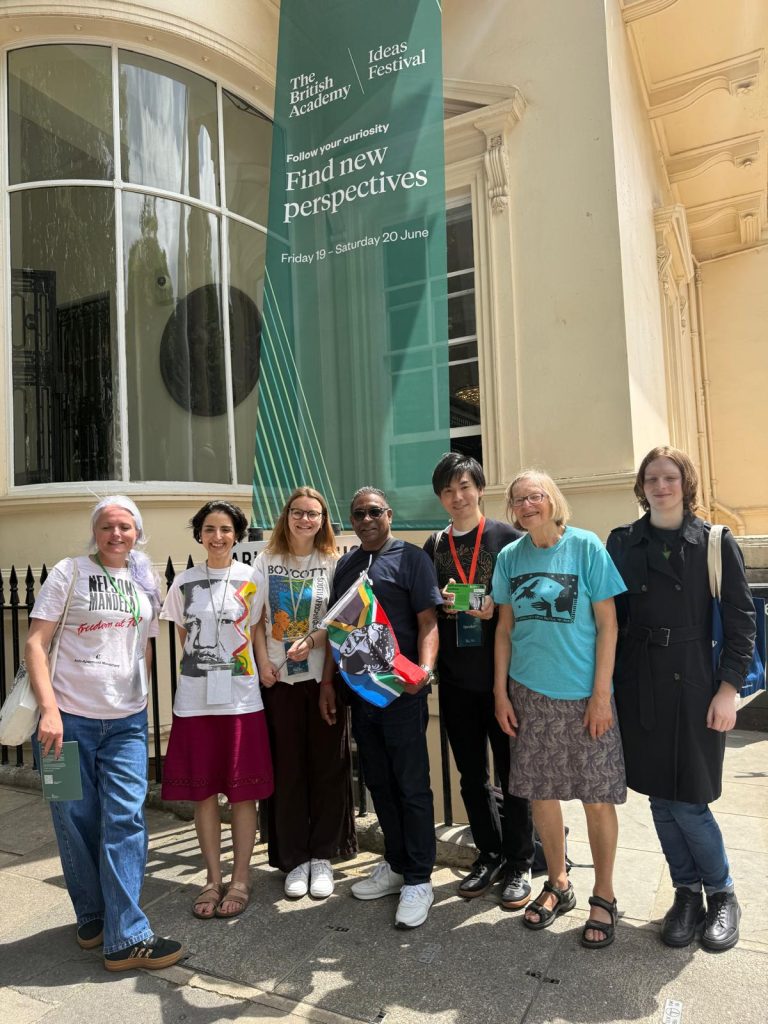
As I looked around at the crowd gathering outside the British Academy, it was difficult not to reflect on how long this journey had been.
I first began researching and developing this walking tour four years ago. What started as an interest in uncovering London’s anti-apartheid heritage grew into a much larger collaboration with the Anti-Apartheid Legacy Centre. With support from the Oxford Knowledge Exchange Seed Fund, we expanded the project into the Anti-Apartheid London Digital Map, an initiative that aims to map more than fifty sites connected to anti-apartheid activism across the city.
The tour itself was led and authored by Dr Julie Partsch, whose knowledge of London’s anti-apartheid history guided us through Westminster’s streets and squares. What made the afternoon truly special was the presence of tour co-writer Christabel Gurney OBE, a veteran Anti-Apartheid Movement activist whose memories brought the sites vividly to life.
Founded in 1959, the British Anti-Apartheid Movement (AAM) mobilised hundreds of thousands of people through campaigns, protests, boycotts and political lobbying in support of the struggle against apartheid in South Africa. Widely regarded as one of the most influential international solidarity movements of the twentieth century, the AAM played a significant role in building public pressure for sanctions against the apartheid regime and securing support for Nelson Mandela and the broader liberation struggle.
One of the most memorable moments came outside the Ministry of Defence on Whitehall. In 1971, South African Defence Minister P.W. Botha visited London seeking British support for supplying warships to apartheid South Africa. His visit sparked protests from anti-apartheid activists determined to challenge Britain’s relationship with the regime.
As we stood outside the building, Christabel recalled joining the demonstration. While some protesters threw tomatoes, she and a friend decided on a more theatrical approach: they bought marine distress flares and set them off outside the Ministry. The story prompted plenty of laughter from the group, but it also captured something important about the movement’s creativity, courage and determination.
Elsewhere on the route, we visited South Africa House, the focal point of some of the most significant anti-apartheid demonstrations in Britain, and Trafalgar Square, where thousands gathered over decades to protest apartheid and demand Nelson Mandela’s release. These are places many Londoners pass every day without a second thought. Yet they were once stages for international solidarity and collective action.
What struck me most during the walk was how engaged everyone was. Participants asked thoughtful questions, shared their own memories and reflected on the continuing relevance of these histories today. The conversations reminded me why public history matters. Research does not belong only in archives, books or digital platforms. Sometimes it belongs on the streets, in conversation with the people who lived it.
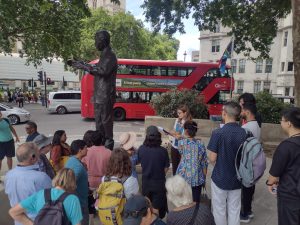
The walking tour provided an engaging and thought-provoking experience, offering participants the opportunity to explore key sites.
For me, the tour felt like a milestone in a project that is still evolving. Seeing so many people walking through Westminster, learning about the hidden histories of anti-apartheid activism, reinforced why we created the Anti-Apartheid London Digital Map in the first place.
These stories deserve to be remembered, not only because they tell us about the past, but because they show what collective action can achieve. As the space for protest and collective action shrinks in contemporary Britain, this is history that needs to be told.
Find out more about the project.
Written by Dr Natasha Robinson
Latest
-
 BlogLooking back to look forward: what sixth form students remember learning, and wanted to learn, about climate and net zero in KS3September 30, 2026
 -
 BlogEquity is digital? Digital access, physical encounters, and belonging in museumsSeptember 16, 2026
 -
 BlogSEND Case Officers and provision for children and familiesSeptember 7, 2026