
What would it take to integrate critical visual literacy into the classroom? Building a shared vision across the sectors

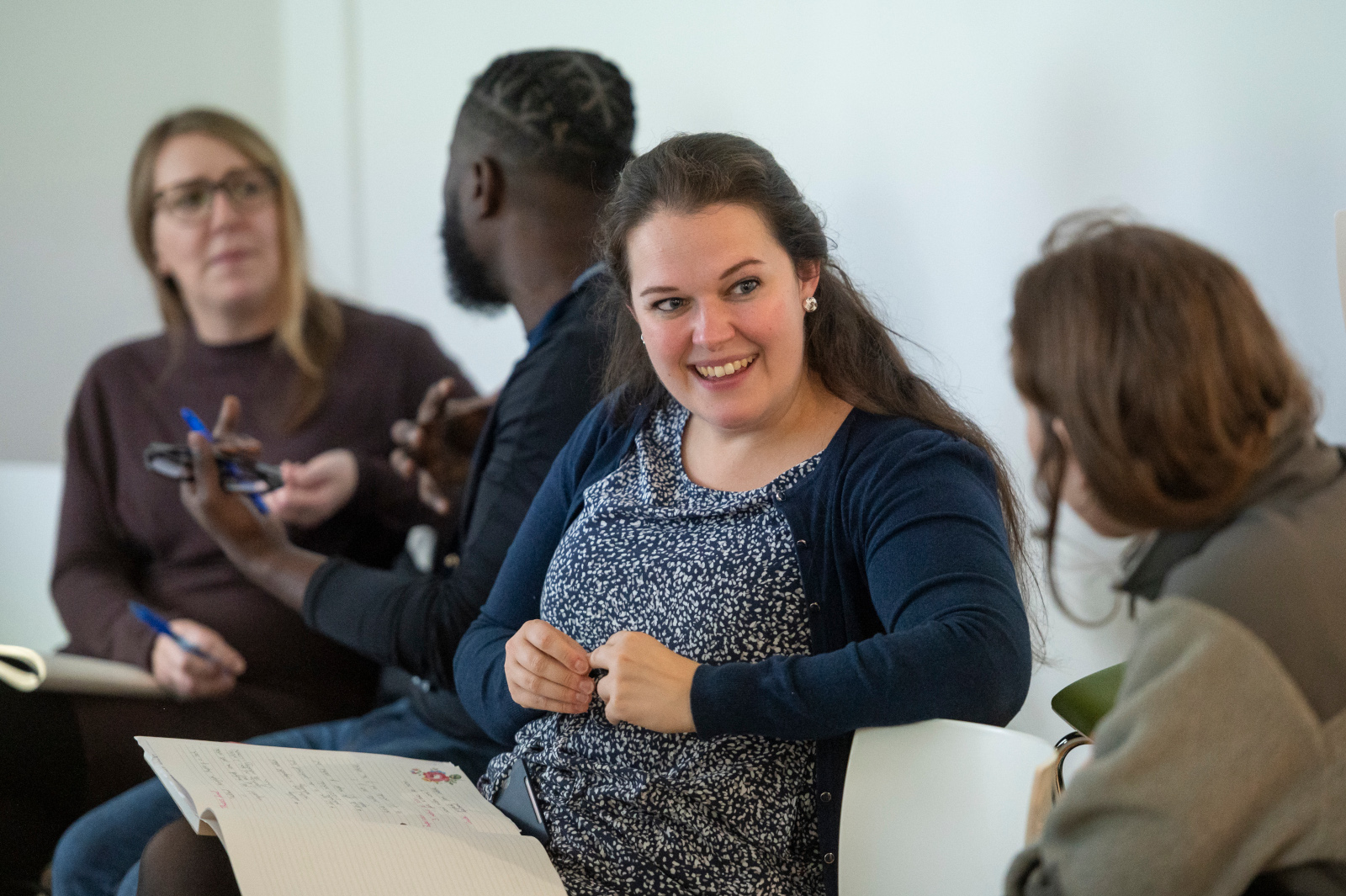
How can we move critical visual literacy from a valuable idea to an integral part of education? This was the question at the heart of a recent roundtable at the Warburg Institute, generously hosted by its Director, Bill Sherman, and Assistant Director, Flora Dennis. Bringing together leading voices from across the arts, education, research and cultural sectors, the event explored the opportunities and practical considerations of embedding critical visual literacy in schools.
Blog written by Rebecca Snell (Research officer on the Picture This project)
The roundtable was collaboratively organised by the partners of Picture This: The Robson Orr Visual Literacy Research Initiative: the Government Art Collection, Art UK and the University of Oxford. Conceived and funded by Sybil Robson Orr and Matthew Orr, Picture This is a major research initiative investigating how engagement with visual artworks can develop young people’s visual literacy and wider learning outcomes. The morning provided an opportunity to share preliminary findings from the research and, ahead of the Curriculum and Assessment Review, bring together expertise, experience and perspectives to consider how critical visual literacy might become a more established part of education.
The discussions were characterised by a shared commitment to the value of critical visual literacy, alongside constructive challenge about what meaningful integration might look like in practice. Two provocations framed the conversation: the practical challenges of embedding critical visual literacy in schools, and the promising pathways towards making this a reality.
Provocation 1 led by Will Grant: What are the practical challenges of embedding critical visual literacy in schools?
One of the central questions was where critical visual literacy sits within the curriculum. While its foundations are closely connected to Art and Design, the skills of observation, interpretation, questioning and evidence-based reasoning have relevance far beyond the art classroom. Participants explored how these skills could be developed across subjects without diminishing the specialist knowledge and importance of art and art history.
There was recognition that much of this work is already happening in schools, although it may not be explicitly identified as visual literacy. Connecting existing practice, developing shared language and encouraging greater collaboration between subjects could help make these skills more visible and their value better understood.
Teacher confidence and agency were recurring themes. Many teachers, particularly generalist primary teachers, receive limited specialist training in art and may feel less confident facilitating visual enquiry. However, participants highlighted the wealth of expertise and resources already available through schools and cultural organisations. Making these more accessible, alongside meaningful professional development, could help teachers recognise and build on the skills they are already supporting.
The realities of school life were also central to the discussion. With full timetables, curriculum expectations and significant pressures on teachers, critical visual literacy needs to be integrated into existing teaching rather than presented as another demand. Supportive school leadership, teacher autonomy and opportunities for collaboration were all identified as important conditions for success.
Underlying these discussions was a broader question about how we value different forms of learning. Participants challenged the perception of art as simply an enrichment activity, highlighting the intellectual demands of looking closely, exploring interpretations and reasoning through uncertainty. Visual enquiry can offer different routes into learning, enabling pupils to develop confidence, engage with complexity and experience success in ways that may not always be possible through more conventional approaches.
Provocation 2 led by Michele Gregson: What promising pathways exist to embed critical visual literacy explicitly in schools?
While we saw the first provocation identifying the practical considerations, the second revealed a strong appetite for collective action.
There is already an extraordinary breadth of work taking place across schools, museums, galleries, universities and cultural organisations. Rather than creating something entirely new, participants recognised the opportunity to connect existing programmes, share expertise and make resources easier for teachers to discover and use.
Initial teacher training and continuing professional development emerged as particularly promising pathways. Art UK’s work with universities through The Superpower of Looking, which has already reached more than 1,500 trainee teachers across 17 universities, offered an example of how visual literacy approaches can become embedded within teacher education. Building on such models could help establish confidence early in teachers’ careers while providing opportunities for continued development.
Participants also explored the connections between critical visual literacy and wider educational priorities. In an increasingly image-saturated world, the ability to question, interpret and evaluate visual information is closely connected to critical thinking, online safety and navigating misinformation and disinformation. Potential links with school belonging, SEND provision and vocational education were also discussed, opening up further questions for research and opportunities for collaboration.
The conversation extended to the experience of looking itself. Participants reflected on the distinctive qualities of encountering original artworks and physical objects, the opportunities offered by digital images, and the value of sustained attention in a world increasingly shaped by rapid technological change.
Across these conversations, collaboration was seen as essential. Participants discussed the potential for stronger regional networks, shared resources and closer alignment with organisations including the National Centre for Arts Education. There was a clear ambition to connect the many strands of existing work and build a stronger, evidence-informed voice for critical visual literacy.
Proactive next steps
What emerged from the morning was not a suggestion that embedding critical visual literacy would be straightforward, but a recognition that much of the expertise, commitment and practical experience needed to make progress already exists.
The challenge is to connect these efforts, strengthen the evidence base and ensure that teachers have the confidence, resources and support to bring critical visual literacy into their classrooms. It is also to articulate more clearly why these skills matter, not only for academic learning, but for helping young people understand, question and engage with the world around them.
As Picture This continues its research, the insights from this roundtable will help inform wider conversations about the future of critical visual literacy in education. The morning demonstrated the value of bringing different perspectives together, not simply to advocate for change, but to challenge assumptions, examine practical realities and identify where collective effort could make the greatest difference.
Our thanks go to everyone who contributed their expertise, ideas and thoughtful challenge. The strength of the discussion reflected both the depth of work already underway and a shared determination to ensure that critical visual literacy has a meaningful place in the education of young people.
Latest
-
 BlogWhen Stories Become Learning: The Power of Books and TalkNovember 17, 2026
-
 BlogReflections on global universities: spaces for South-South engagementsNovember 17, 2026
-
 BlogTogether for Developmental Language DisorderOctober 13, 2026