The Project
This project investigates how young people encounter nation(hood) through both their everyday lives and geographical education in Oxford and Edinburgh.
This research examines young people’s encounters with nation(hood) in Oxford and Edinburgh. Using participatory mapping, the project explores young people in Year 7 (England) and Secondary 1 (Scotland)’s encounters with nation(hood) as part of their everyday lives. Through interviews, the project then investigates young people’s perspectives on what and how they have learned about nation(hood) in school geography.
Nation and nationhood can have multiple meanings to young people, and may be experienced differently depending on their identities and the geographies and histories of the place(s) they stay. Young people encounter nation(hood) as part of their everyday lives, including through watching international sports matches, discussions with family, and engagement (social) media. They may also engage with debates about Scottish independence, the ongoing impacts of colonialism, geopolitical tensions, or changing geographies of the UK.
As a subject which teaches young people about the world, geography has played a variety of roles in education about nation(hood). This has included educating citizens for empire and nation, but also supporting young people to think about the factors which shape (their own) citizenship. England and Scotland have distinct education policy contexts, leading to differences in the teaching of both geography and nation(hood). Oxford and Edinburgh also have distinct histories, and local, national and global links through universities, industry and the Scottish parliament (Edinburgh), making them rich contexts for examining children’s encounters with nation(hood).
Collaborating with geography teachers in both Oxford and Edinburgh, the underpinning aim of the research is to investigate the relationships and disconnects between young people’s geographies – their experiences and imaginations of the world – and what they learn in school geography. The project will conclude with recommendations for future research, and education policy and practice, about the teaching of children’s geographies and political geography.
More News
-
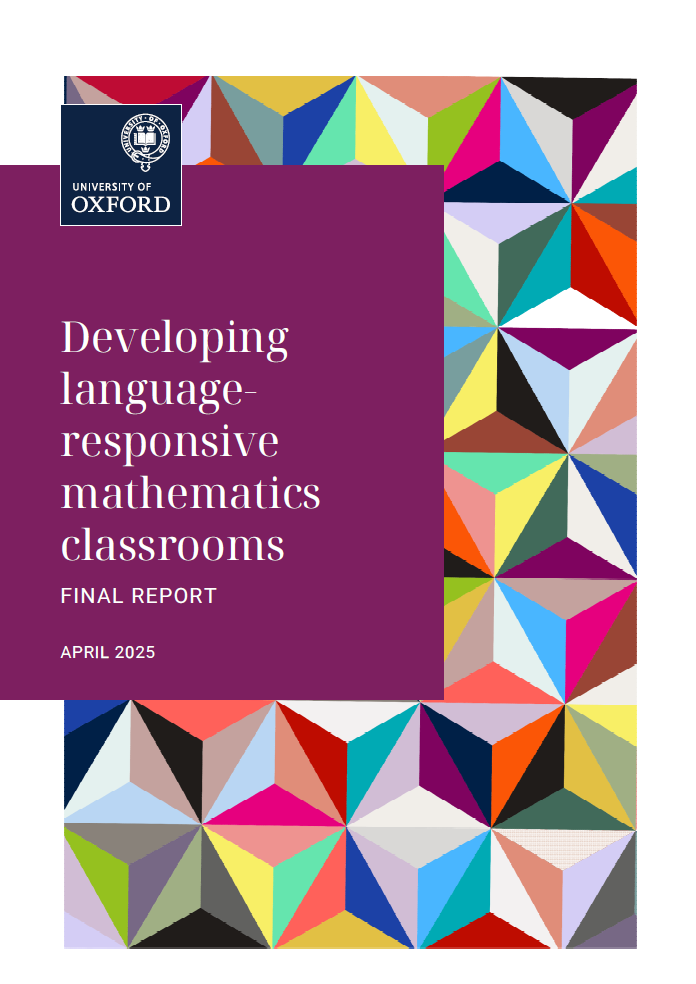 NewsNew resources help students speak the language of mathsApril 30, 2025
 -
 BlogPractical science and pandemicsApril 20, 2020
 -
 NewsCOVID-19: Department publishes home-schooling resource for parents and teachersMarch 30, 2020
 -
 BlogHow children can learn to balance science and religionMarch 9, 2020
 -
 NewsSibel Erduran appointed to the PISA 2024 Science Framework Strategic Visioning Expert GroupFebruary 10, 2020
 -
 NewsStaff spotlight: Steve PuttickDecember 17, 2019